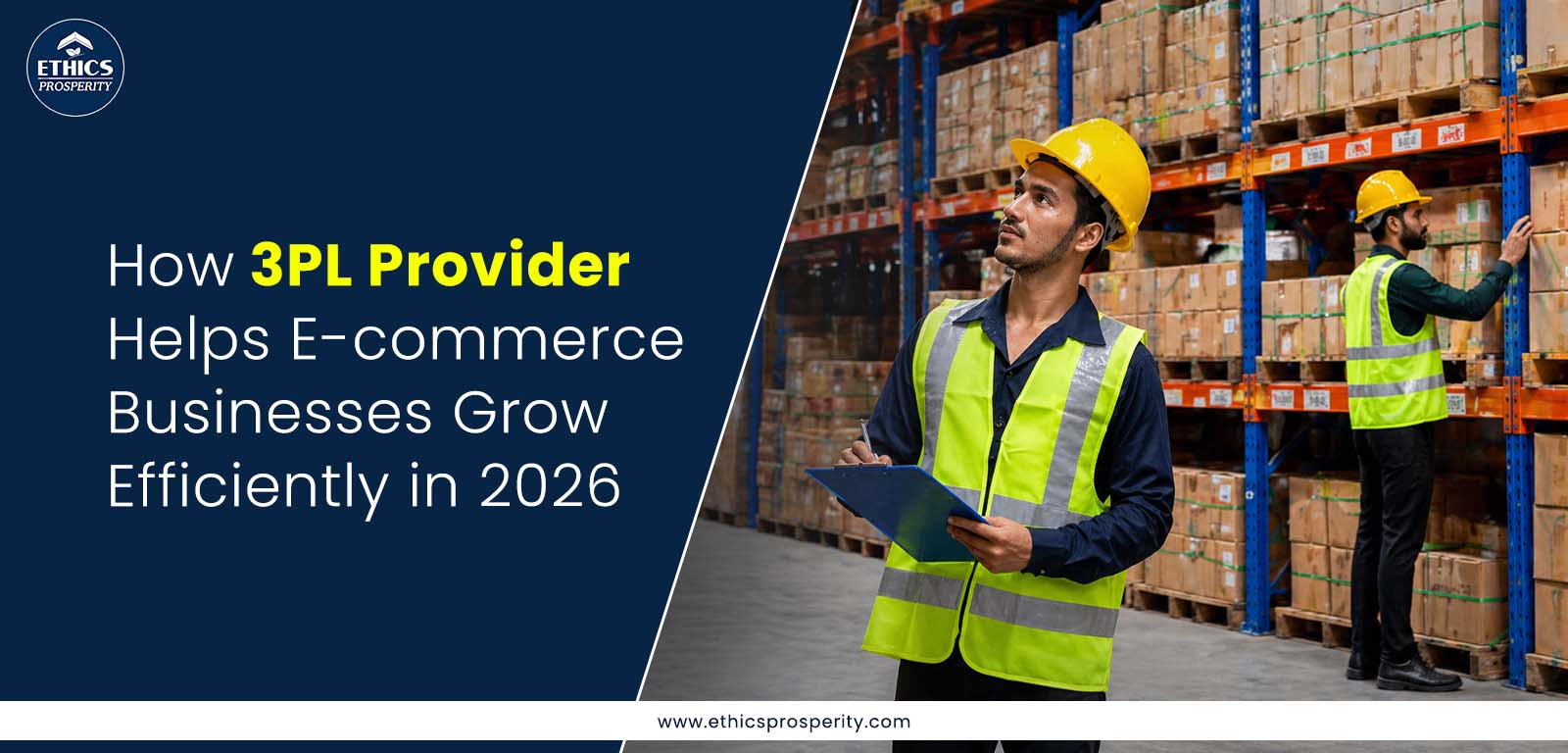
The e-commerce industry has evolved rapidly over the last few years, driven by changing customer expectations, digital adoption, faster delivery demands, and increasing market competition. Modern consumers expect seamless shopping experiences, real-time tracking, quicker deliveries, and hassle-free returns regardless of order size or location.
As e-commerce operations become more complex, logistics has shifted from being a backend operational function to a strategic business driver. Businesses that fail to optimize fulfillment and delivery operations often face delayed shipments, inventory inaccuracies, rising logistics costs, and poor customer retention.
To overcome these operational challenges, many brands are increasingly adopting third-party logistics services to improve efficiency, scalability, and customer experience without investing heavily in their own warehousing and transportation infrastructure.
Today, outsourcing logistics is no longer limited to transportation management. Modern logistics providers now support warehousing, inventory visibility, fulfillment operations, reverse logistics, transportation coordination, and technology integration within a unified operational ecosystem.
For e-commerce businesses aiming to scale sustainably in 2026, selecting the right logistics partner has become a critical strategic decision.
What Are Third-Party Logistics Services?
Third-party logistics services refer to outsourced logistics solutions where businesses partner with specialized logistics providers to manage supply chain operations, such as:
-
Warehousing
-
Inventory storage
-
Order processing
-
Packaging
-
Shipping
-
Transportation coordination
-
Reverse logistics
-
Delivery tracking
Instead of building and managing their own logistics infrastructure, ecommerce businesses leverage external operational expertise and technology-driven logistics ecosystems.
Modern Third-party logistics services help businesses streamline operations while improving speed, visibility, and cost efficiency.
Many growing brands rely on 3PL services for e-commerce business operations to support increasing order volumes and regional market expansion.
Why E-commerce Businesses Are Outsourcing Logistics Operations
E-commerce growth has increased pressure on operational efficiency. Businesses now face challenges such as:
-
Rising delivery expectations
-
Increasing return rates
-
Multi-channel fulfillment complexity
-
Seasonal order fluctuations
-
Inventory synchronization issues
-
Transportation cost optimization
Managing these operations internally often requires significant infrastructure investment, operational expertise, workforce management, and technology deployment.
This is why businesses are increasingly adopting Outsourced supply chain management models to improve operational flexibility and focus more on product development, customer acquisition, and brand growth.
Logistics outsourcing also helps businesses adapt quickly to changing consumer demand and market dynamics without disrupting operational performance.
Major Benefits of Outsourcing Third-Party Logistics Services
1. Reduced Operational Costs
Building an in-house logistics network requires significant investment in:
-
Warehousing infrastructure
-
Transportation fleets
-
Technology systems
-
Labor management
-
Operational compliance
Outsourcing logistics allows businesses to reduce fixed operational costs while accessing shared logistics infrastructure and specialized expertise.
One of the biggest Benefits of outsourcing logistics is improved cost efficiency without compromising service quality.
2. Faster Order Fulfillment
Delivery speed has become one of the most important customer satisfaction factors in e-commerce.
3PL providers use strategically located warehouses, optimized transportation planning, and advanced fulfillment systems to reduce delivery timelines.
Modern E-commerce fulfillment solutions are designed to improve:
-
Order processing speed
-
Picking and packing efficiency
-
Delivery coordination
-
Shipment visibility
This helps businesses improve customer experience and increase repeat purchases.
3. Improved Inventory Management
Inventory visibility remains a major challenge for growing e-commerce brands.
Advanced 3PL systems provide:
-
Real-time inventory tracking
-
Stock synchronization
-
Demand forecasting support
-
Automated inventory updates
Improved inventory management reduces:
-
Stockouts
-
Overstocking
-
Fulfillment delays
-
Inventory discrepancies
Efficient inventory control also improves operational planning and working capital optimization.
4. Scalable Logistics Infrastructure
One of the biggest advantages of outsourcing logistics is scalability.
E-commerce businesses often experience:
-
Seasonal demand spikes
-
Festive sales surges
-
Regional expansion challenges
-
Sudden order volume fluctuations
3PL providers offer flexible logistics capacity that supports business growth without requiring major infrastructure investments.
This scalability is especially valuable for fast-growing D2C and marketplace-driven brands.
5. Access to Advanced Logistics Technology
Modern logistics operations are increasingly technology-driven.
Leading 3PL providers use:
-
Warehouse Management Systems (WMS)
-
Transportation Management Systems (TMS)
-
AI-driven forecasting tools
-
Real-time tracking platforms
-
Data analytics dashboards
Technology integration improves operational visibility, inventory accuracy, and delivery coordination.
Businesses partnering with experienced third-party logistics companies gain access to advanced logistics capabilities without building expensive internal systems.
How 3PL Improves Customer Experience
Customer experience in e-commerce is heavily influenced by logistics performance.
Late deliveries, damaged shipments, poor communication, and difficult returns directly impact customer trust and retention.
Efficient logistics operations improve:
-
Delivery speed
-
Order accuracy
-
Shipment tracking transparency
-
Return processing efficiency
Modern consumers expect predictable and transparent delivery experiences across all purchasing channels.
Professional logistics support helps e-commerce brands maintain operational consistency while improving customer satisfaction metrics.
Challenges E-commerce Businesses Face Without 3PL Support
1. Delivery Delays
Limited warehousing reach and inefficient transportation planning often result in slower deliveries.
2. Inventory Inaccuracy
Manual inventory systems increase the risk of stock discrepancies and fulfillment errors.
3. Rising Reverse Logistics Costs
Returns management is becoming increasingly expensive for e-commerce businesses.
4. Limited Operational Scalability
Businesses managing logistics internally often struggle to handle rapid growth and peak-demand periods efficiently.
5. Lack of Supply Chain Visibility
Poor operational visibility makes it difficult to optimize logistics performance and customer experience.
Key Factors to Consider Before Choosing a 3PL Partner
Selecting the right logistics partner directly impacts operational performance and customer satisfaction.
Businesses should evaluate:
1. Technology Capabilities
The provider should offer:
-
Real-time inventory visibility
-
Shipment tracking
-
Reporting dashboards
-
System integration support
2. Warehouse Network
A strong fulfillment network improves regional delivery speed and operational efficiency.
3. Industry Expertise
Choose providers with operational experience in e-commerce fulfillment and supply chain management.
4. Scalability
The logistics provider should support future growth and demand fluctuations.
5. Customer Support Infrastructure
Efficient issue resolution and proactive communication are critical for e-commerce operations.
Future Trends in E-Commerce Logistics and 3PL Operations
The logistics industry is rapidly evolving due to automation, AI adoption, and changing customer expectations.
Key 2026 trends include:
1. AI-Driven Logistics Planning
AI-powered forecasting and route optimization are improving operational efficiency and reducing logistics costs.
2. Automation in Warehousing
Automated picking, sorting, and packaging systems are improving fulfillment speed and accuracy.
3. Hyperlocal Fulfillment Expansion
Urban fulfillment models are enabling faster same-day and next-day deliveries.
4. Data-Driven Operational Visibility
Real-time analytics platforms are helping businesses improve supply chain transparency and decision-making.
Conclusion
As e-commerce operations become increasingly competitive and customer expectations continue evolving, logistics efficiency is becoming a critical business differentiator.
Businesses that invest in scalable, technology-driven, and operationally resilient logistics ecosystems are better positioned to improve customer satisfaction, reduce operational costs, and support long-term growth.
Modern third-party logistics services are no longer just transportation or warehousing solutions. They now function as integrated operational partnerships that help businesses improve fulfillment performance, inventory visibility, and supply chain agility.
For e-commerce brands looking to scale efficiently in dynamic market conditions, outsourcing logistics operations can create significant operational and strategic advantages.
Ethics Prosperity helps businesses build scalable logistics and fulfillment ecosystems designed to improve operational efficiency, delivery performance, and long-term supply chain growth.