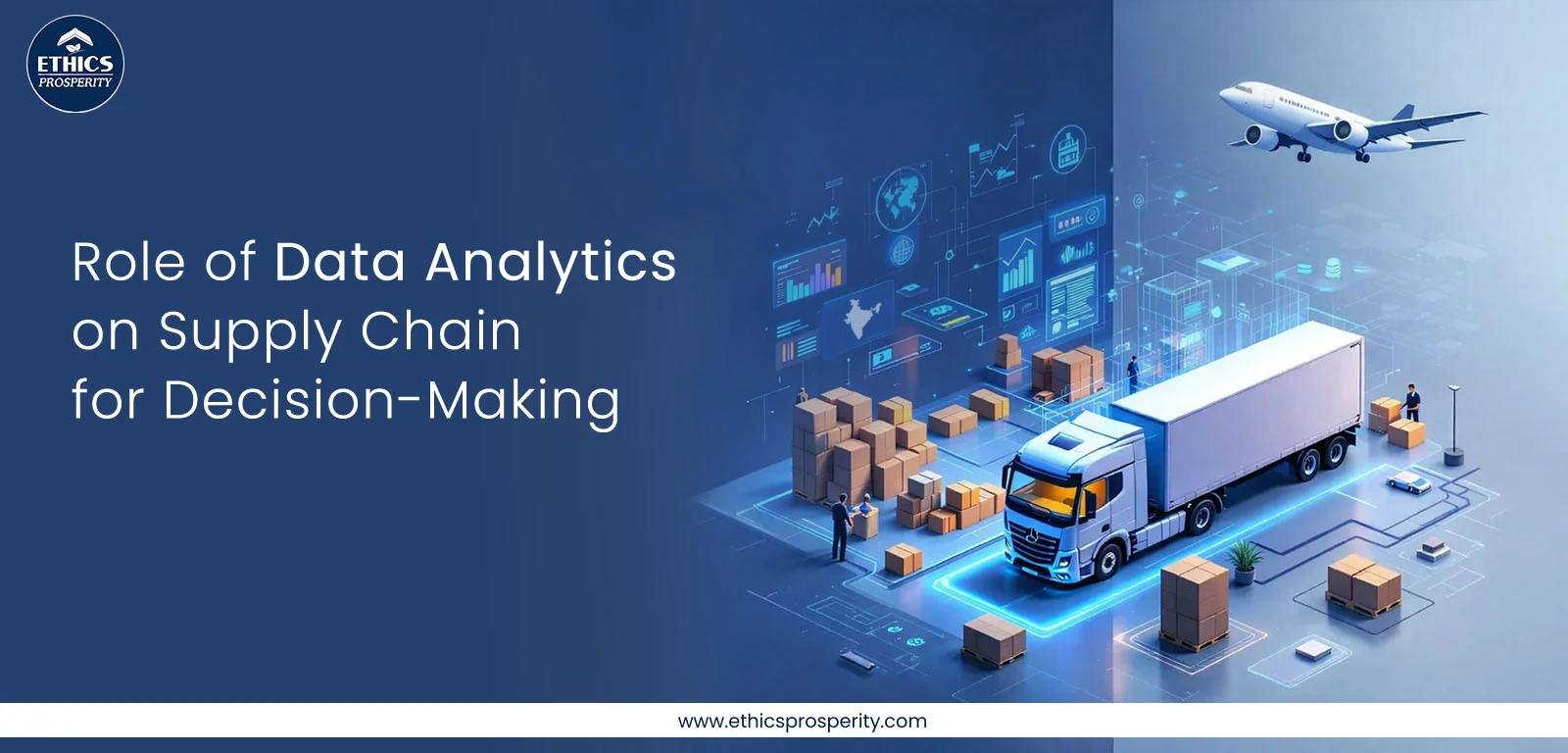
In today’s hyper-competitive business environment, supply chains are no longer linear—they are dynamic, data-driven ecosystems. Organizations that rely on intuition alone struggle to keep pace with volatility, demand fluctuations, and operational complexities.
This is where data analytics becomes a critical enabler. Within modern End-to-End Supply Chain Management, data analytics empowers businesses to make informed, real-time decisions that enhance efficiency, reduce costs, and improve service levels.
Leading Supply Chain Companies in India are increasingly leveraging analytics to gain a competitive edge, optimize operations, and align supply chain strategies with business goals.
What is Data Analytics in Supply Chain?
Data analytics in supply chain refers to the systematic use of data, statistical models, and advanced technologies to analyze operations and support decision-making.
It involves collecting data from multiple sources, such as:
-
Warehousing systems
-
Transportation networks
-
Supplier databases
-
Customer demand patterns
When integrated effectively, analytics provides actionable insights across the entire Warehouse and Logistics ecosystem.
Technologies such as AI in logistics, IoT, and cloud computing have further enhanced the ability to process large volumes of data, enabling predictive and prescriptive decision-making.
Importance of Data Analytics in Decision-Making
Data analytics plays a pivotal role in transforming supply chains from reactive to proactive systems.
Key importance includes:
-
Improved Visibility: Real-time insights into inventory, shipments, and supplier performance
-
Faster Decision-Making: Data-backed strategies reduce reliance on guesswork
-
Cost Optimization: Identifying inefficiencies and eliminating waste
-
Customer-Centric Operations: Aligning supply chain processes with demand expectations
To compete with Top logistics companies in India, organizations must embed analytics into every operational layer.
Key Areas Where Data Analytics Drives Decisions
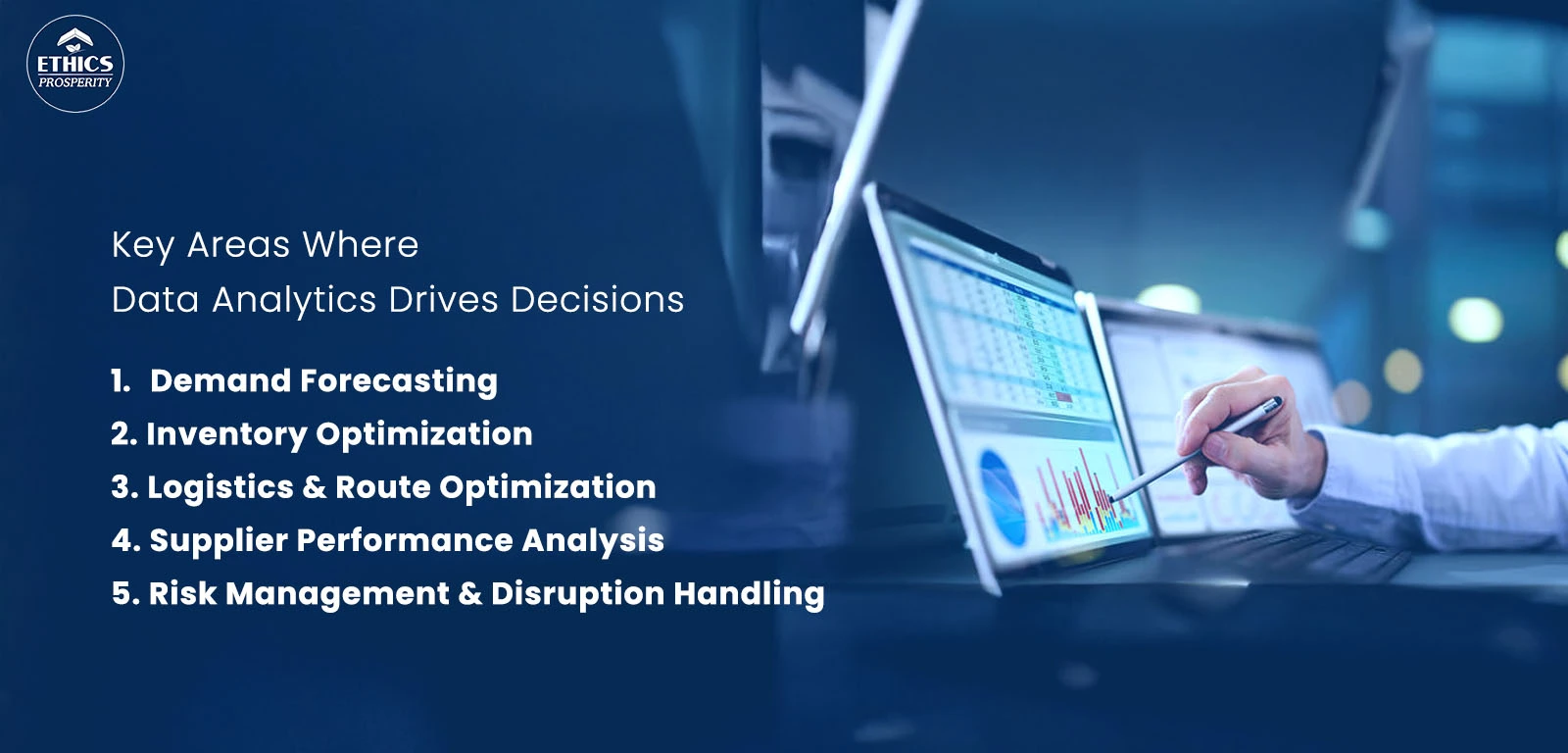
Demand Forecasting
Accurate demand forecasting is the foundation of efficient supply chain planning.
Analytics tools analyze historical data, seasonal trends, and market signals to predict future demand. This is particularly crucial for businesses serving Quick Commerce Companies, where demand volatility is high.
Benefits include:
-
Reduced stockouts
-
Optimized inventory levels
-
Improved production planning
Inventory Optimization
Data analytics helps maintain the right balance between supply and demand.
By leveraging insights from a Warehouse Management System(WMS), businesses can:
-
Reduce excess inventory
-
Improve storage utilization
-
Minimize holding costs
This approach is widely adopted by Warehouse Companies in India to enhance operational efficiency.
Logistics & Route Optimization
Transportation efficiency is a major cost driver in supply chain operations.
Analytics enables:
-
Real-time route planning
-
Fuel cost reduction
-
Faster deliveries
Integration with Last Mile Delivery Companies ensures optimized delivery networks, especially in urban environments.
Supplier Performance Analysis
Supplier reliability directly impacts supply chain performance.
Data analytics helps evaluate suppliers based on:
-
Delivery timelines
-
Quality consistency
-
Cost efficiency
This enables businesses to collaborate with the best supply chain companies and maintain high service standards.
Risk Management & Disruption Handling
Supply chains are vulnerable to disruptions such as delays, demand spikes, and external uncertainties.
Analytics enables proactive risk management by:
-
Identifying potential disruptions
-
Simulating scenarios
-
Creating contingency plans
This capability is critical for maintaining continuity in distribution management.
Benefits of Data Analytics in Supply Chain
Enhanced Operational Efficiency
Analytics streamlines processes across warehousing, transportation, and inventory management. Technologies like warehouse automation further enhance efficiency by reducing manual intervention.
Cost Reduction
By identifying inefficiencies, businesses can significantly reduce operational costs. Optimized routing, inventory control, and supplier management contribute to overall savings.
Improved Customer Experience
Faster deliveries, accurate order fulfillment, and real-time tracking improve customer satisfaction. This is essential for competing with fast-growing Quick Commerce Companies.
Scalability and Flexibility
Analytics-driven supply chains can quickly adapt to market changes and scale operations efficiently. Cloud-based systems enable seamless expansion across regions, including logistics hubs like warehousing companies in Gurugram.
Better Decision Accuracy
Data-driven decisions are more reliable and aligned with business objectives. This reduces risks and enhances long-term strategic planning.
Challenges in Implementing Data Analytics
Despite its advantages, implementing data analytics comes with certain challenges:
Data Silos
Disconnected systems across departments limit data visibility and integration.
High Initial Investment
Adopting advanced analytics tools and infrastructure requires significant investment, which can be challenging for SMEs.
Lack of Skilled Workforce
Effective analytics implementation requires skilled professionals capable of interpreting complex data.
Data Security and Privacy Concerns
With increasing reliance on data, ensuring security and compliance becomes critical.
Technologies like Blockchain in smart warehousing help address these concerns by providing secure and transparent data management.
Integration Complexity
Integrating analytics with existing systems such as Custom Warehousing setups and legacy platforms can be complex and time-consuming.
Future of Data Analytics in Supply Chain
The future of supply chain analytics is driven by emerging technologies and evolving business needs.
AI and Predictive Analytics
The adoption of Ai in logistics will continue to grow, enabling predictive and prescriptive decision-making.
Smart Warehousing
The evolution of Smart Warehousing will integrate automation, IoT, and analytics for real-time decision-making.
Blockchain Integration
Blockchain in smart warehousing will enhance transparency, traceability, and trust across supply chains.
Cold Chain Optimization
For temperature-sensitive goods, analytics-driven Cold Storage Warehouses will improve monitoring and compliance.
Global Trade Enablement
Use of Customs Bonded Warehouse facilities combined with analytics will streamline cross-border operations and improve cost efficiency.
Collaboration with 3PL Providers
Partnerships with 3PL Companies in India will become more data-driven, enabling better coordination and performance tracking.
Conclusion
Data analytics is no longer a supplementary function—it is a strategic necessity in modern supply chain management. Organizations that leverage analytics effectively can transform their operations, improve efficiency, and gain a competitive advantage.
By integrating analytics across warehousing, logistics, and distribution, businesses can build resilient and agile supply chains capable of adapting to market changes.
At Ethics Prosperity, the focus is on enabling data-driven supply chain transformation through innovative, scalable, and technology-driven solutions that empower businesses to make smarter decisions.