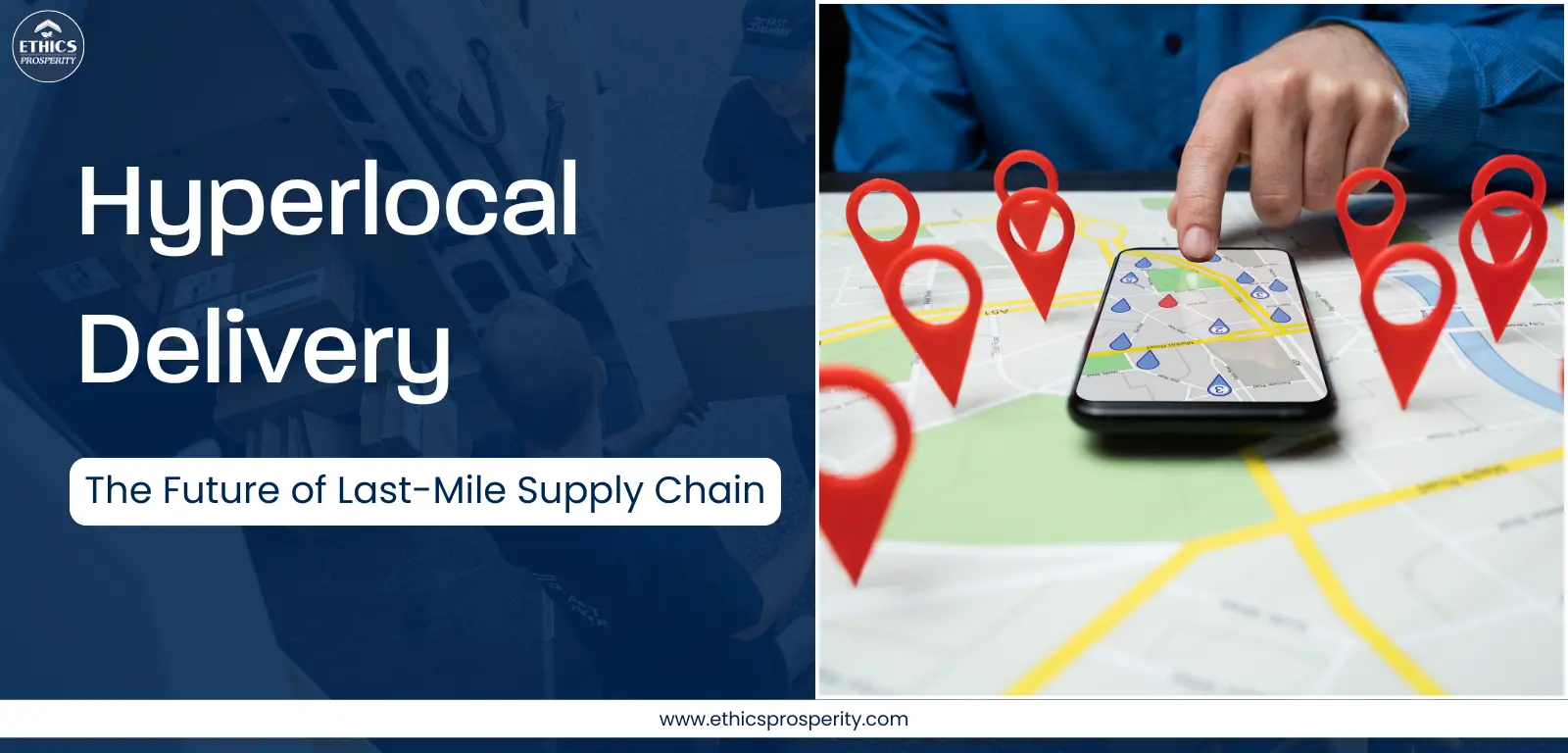
Hyperlocal delivery is transforming the last-mile delivery solutions landscape by enabling ultra-fast fulfillment through nearby stores, micro-warehouses, and local hubs. By minimizing travel distance and using real-time tracking, smart routing, and local inventory, businesses can deliver products within minutes. This approach strengthens the end-to-end supply chain, making it more agile, cost-efficient, and responsive to customer needs.
At the same time, the rise of quick commerce logistics is accelerating this shift, pushing companies to build faster, more flexible delivery ecosystems. With growing demand for instant convenience and urban accessibility, the future of hyperlocal delivery is set to redefine speed, service quality, and competitiveness in the supply chain.
What is Hyperlocal Delivery?
Hyperlocal delivery is a fast and location-focused model where products are delivered from nearby stores, micro-warehouses, or local hubs to customers within a small geographic area. It strengthens last-mile delivery solutions by reducing travel time and enabling rapid fulfillment, often within minutes. As part of modern quick commerce logistics, this approach boosts convenience, cuts costs, and improves overall efficiency across the end-to-end supply chain. With growing demand for instant access and urban speed, hyperlocal delivery is becoming a key driver in the future of e-commerce and shaping how businesses meet customer expectations.
Key Benefits of Hyperlocal Delivery
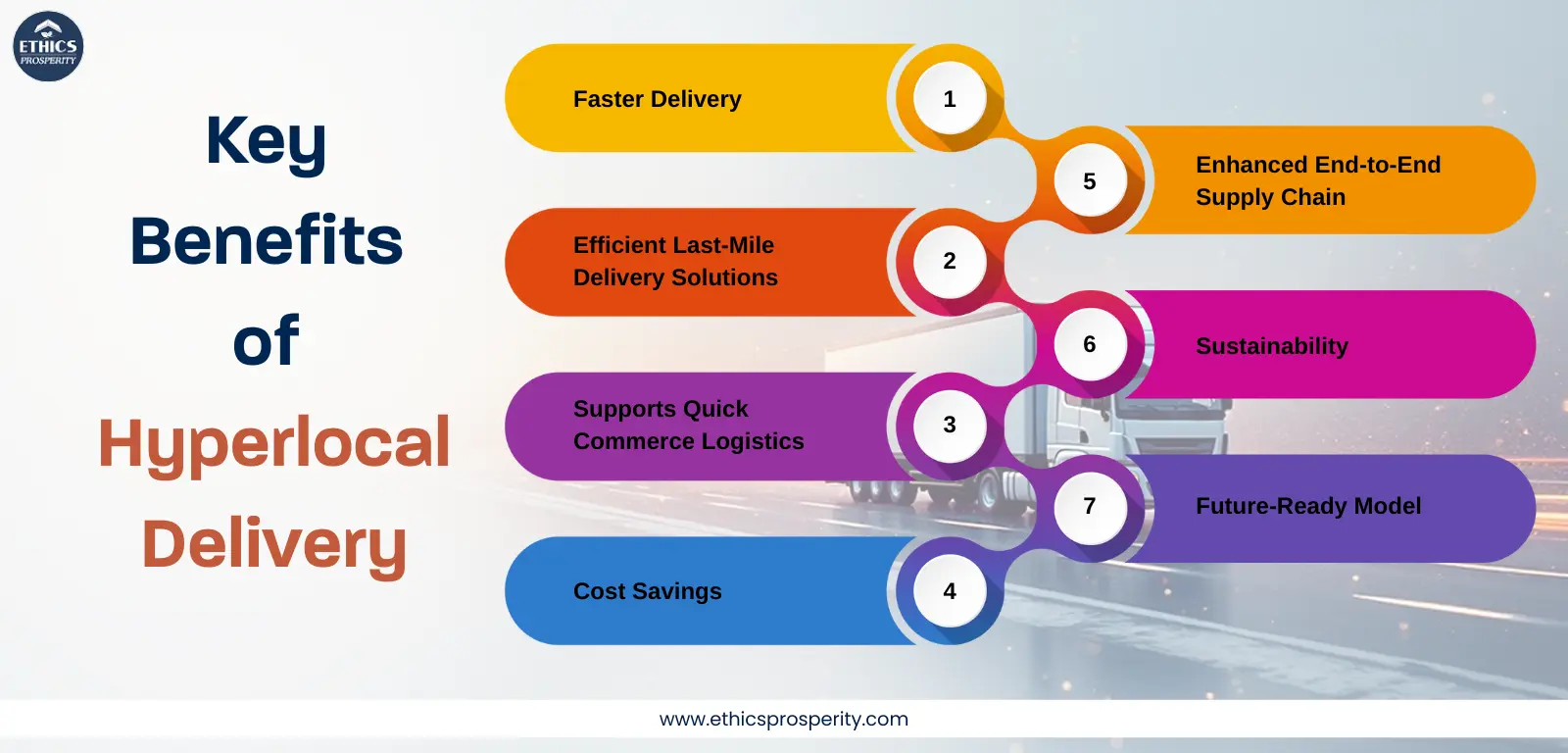
Hyperlocal delivery enables fast fulfillment by delivering goods from nearby vendors within a few kilometers, resulting in higher speed, better efficiency, and improved customer satisfaction. Some of its key benefits are:
-
Faster Delivery – Hyperlocal delivery enables ultra-quick fulfillment from nearby vendors, improving customer satisfaction.
-
Efficient Last-Mile Delivery Solutions – Optimizes routes and reduces travel time for reliable deliveries.
-
Supports Quick Commerce Logistics – Meets the growing demand for rapid, urban deliveries.
-
Cost Savings – Shorter routes reduce transportation and operational expenses.
-
Enhanced End-to-End Supply Chain – Integrates local inventory, riders, and digital systems for smooth operations.
-
Sustainability – Shorter distances lower the carbon footprint.
-
Future-Ready Model – A key trend shaping the future of hyperlocal delivery and modern supply chains.
Challenges in Hyperlocal Delivery
Hyperlocal delivery faces major operational, financial, and logistical challenges, mainly due to the pressure of meeting ultra-fast customer expectations while staying profitable. Some of its key challenges are:
-
High Operational Costs – Ultra-fast delivery expectations increase staffing, routing, and packaging expenses.
-
Last-Mile Delivery Complexity – Managing frequent, short-distance drops makes last-mile delivery solutions harder to optimize.
-
Quick Commerce Pressure – The speed required in quick commerce logistics leaves little room for delays or errors.
-
Local Inventory Limitations – Small storage points can run out of stock, disrupting the end-to-end supply chain.
-
Urban Challenges – Traffic, regulations, and delivery density affect speed and accuracy.
-
High Customer Expectations – Consumers expect instant deliveries, increasing operational pressure.
-
Future Readiness – Staying aligned with the future of hyperlocal delivery requires continuous innovation and investment.
Technology Driving Hyperlocal Delivery
Technology is the driving force behind modern hyperlocal delivery, enabling companies to offer ultra-fast, precise, and reliable service. Real-time GPS tracking and advanced mapping help optimize routes, reduce delays, and enhance last-mile delivery solutions, especially in busy urban areas. These tools allow riders to navigate traffic efficiently and ensure timely drop-offs.
AI and machine learning further strengthen quick commerce logistics by forecasting demand, managing hyperlocal inventory, and automating order processing. This ensures the right products are stocked locally for rapid fulfillment. Automated order management systems sync customer orders with vendor inventory instantly, allowing businesses to handle high volumes without manual effort.
Digital platforms, mobile apps, and IoT-enabled devices provide seamless coordination across the end-to-end supply chain, offering real-time visibility into orders, rider location, and delivery conditions. Cloud-based logistics systems help scale operations across multiple regions by automating dispatch, workload balancing, and fleet management.
Together, these technologies are shaping the future of hyperlocal delivery, making it faster, smarter, and more efficient as customer expectations for instant service continue to rise.
Hyperlocal Delivery Vs Quick Commerce
|
Aspect |
Hyperlocal Delivery |
Quick Commerce |
|
Primary Focus |
Fast delivery within a small local radius |
Ultra-fast delivery within minutes |
|
Delivery Speed |
Typically 30–120 minutes |
10–30 minutes |
|
Service Area |
Few kilometers; local stores and vendors |
Dense urban areas with dark stores |
|
Inventory Source |
Nearby shops, micro-warehouses |
Dark stores, dedicated fulfillment hubs |
|
Technology Use |
Routing, tracking, and basic automation |
Advanced quick commerce logistics, AI forecasting |
|
Operational Costs |
Moderate, due to local sourcing |
Higher, due to speed, staffing, and infrastructure |
|
End-to-End Supply Chain Impact |
Improves local efficiency and short-distance logistics |
Requires intensive optimization and real-time coordination |
|
Last-Mile Delivery Solutions |
Optimized but flexible |
Highly optimized and speed-driven |
|
Profitability |
Easier to maintain with controlled costs |
Challenging due to high-speed expectations |
|
Future Role |
Enhances convenience and local reach |
Shapes ultra-fast service in the future of hyperlocal delivery |
Future of Hyperlocal Delivery in Supply Chain
The future of hyperlocal delivery is transforming the supply chain as customers demand faster, more convenient service. With advanced last-mile delivery solutions, AI-driven tools, and evolving quick commerce logistics, businesses are building agile, tech-enabled networks that speed up the end-to-end supply chain and enhance customer satisfaction.
-
Growth of Micro-Fulfillment Centers
More micro-warehouses and dark stores will be set up within cities, placing inventory closer to customers for faster last-mile delivery. -
AI-Driven Demand & Inventory Accuracy
AI will boost hyperlocal forecasting, ensuring better product availability, fewer stockouts, and reduced wastage. -
Smarter Last-Mile Delivery Solutions
Real-time routing, automated dispatch, and traffic analytics will speed up last-mile operations and improve delivery reliability. -
Rise of Quick Commerce Logistics
Hyperlocal delivery will merge with quick commerce models to offer ultra-fast 10–30 minute deliveries for everyday essentials. -
Autonomous & Eco-Friendly Delivery Modes
Electric vehicles, drones, and delivery robots will enhance speed, reduce costs, and support sustainable hyperlocal logistics. -
End-to-End Digital Integration
Unified digital systems will connect vendors, riders, and customers for seamless order flow, tracking, payments, and fulfilment. -
Data-Driven Customer Experience
Hyperlocal insights will help personalize suggestions, improve delivery accuracy, and support subscription-based fast delivery services.
Conclusion
Hyperlocal delivery is set to revolutionise the future of the last-mile supply chain, driven by the growing demand for faster, more efficient, and customer-centric services. As businesses increasingly adopt advanced last-mile delivery solutions and quick commerce logistics, they can ensure seamless, real-time fulfilment that meets evolving consumer expectations. The integration of end-to-end supply chain technologies will further enhance operational efficiency, reduce costs, and optimise delivery networks. Ultimately, the future of hyperlocal delivery lies in its ability to create agile, responsive, and sustainable supply chain models that cater to the dynamic needs of the modern marketplace.