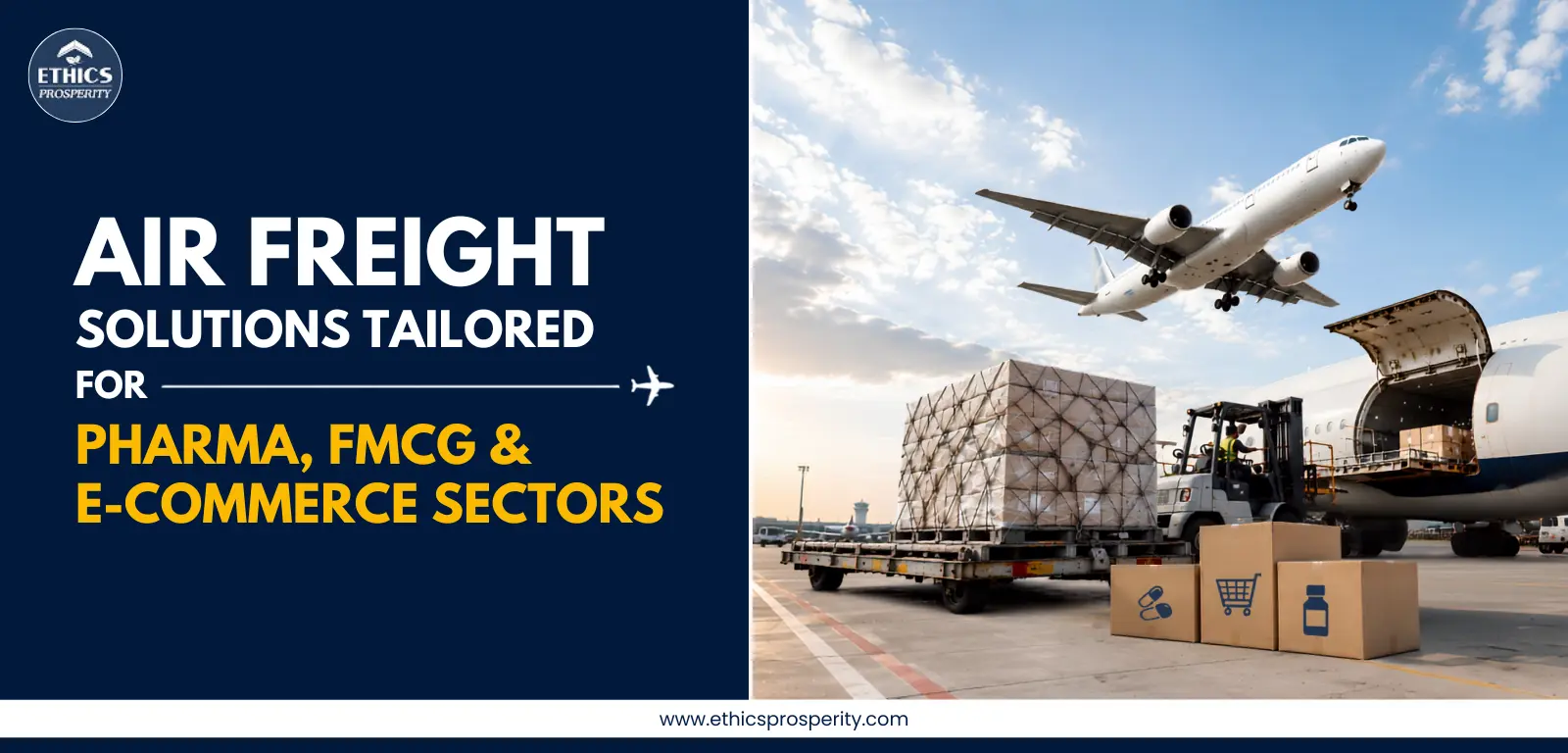
Business supply chains are becoming faster, more connected, and increasingly customer-driven. Whether it is a pharmaceutical manufacturer shipping life-saving medicines, an FMCG company replenishing retail shelves, or an online retailer fulfilling thousands of daily orders, businesses require transportation that is reliable, responsive, and capable of meeting strict delivery timelines. This is where Air Freight Solutions have become an essential part of modern business operations.
Unlike traditional freight modes, air freight enables companies to move high-value and time-sensitive shipments across long distances in significantly less time. However, today's business requirements extend beyond simply transporting cargo by air. Organizations need integrated transportation strategies that connect origin pickup, airport operations, customs clearance, destination handling, and final delivery into one seamless process.
As global and domestic markets continue to evolve, companies are focusing on building more resilient operations that can quickly respond to changing customer demand, supply disruptions, and shorter product life cycles. Businesses that adopt faster transportation models are often better positioned to reduce inventory risks, improve service levels, and maintain operational continuity.
Industries such as healthcare, retail, consumer goods, electronics, and manufacturing are increasingly relying on specialized air freight services rather than standard transportation solutions. The objective is not only to move products quickly but also to protect product quality, maintain regulatory compliance, and deliver a superior customer experience.
This article explores how tailored air freight strategies help Pharma, FMCG, and E-commerce businesses overcome industry-specific logistics challenges while improving operational performance across the supply chain.
Why Air Freight Matters in Modern Supply Chains
In today's competitive business environment, transportation decisions directly influence customer satisfaction, operational efficiency, and revenue growth. Modern Supply chain management requires organizations to balance cost, speed, inventory availability, and service reliability simultaneously.
Air freight has become an important transportation mode because it addresses one of the biggest challenges businesses face—time.
For manufacturers, delayed components can halt production lines. For healthcare organizations, delayed medicines may affect patient care. For retailers, delayed inventory can result in lost sales opportunities. These operational realities have increased the strategic importance of faster transportation.
Today's businesses are also operating with lean inventory models. Rather than storing excessive stock, many organizations rely on rapid replenishment strategies that allow inventory to move quickly between suppliers, warehouses, and customers. Air freight supports this approach by reducing transit time and improving responsiveness across the End-to-end supply chain.
Another important factor is risk management. Global disruptions, weather events, transportation bottlenecks, and changing customer demand require businesses to react quickly. Air freight provides flexibility that helps organizations recover faster from unexpected disruptions while maintaining business continuity.
Technology is also reshaping logistics operations. Digital shipment visibility, predictive analytics, and AI in Supply Chain are enabling businesses to monitor cargo movement in real time, anticipate delays, and improve transportation planning. As businesses continue adopting digital transformation initiatives, air freight is becoming an integral component of connected logistics ecosystems.
Rather than replacing road or rail transport, air freight complements them by supporting urgent shipments, premium products, critical spare parts, healthcare cargo, and high-value inventory that cannot tolerate long transit times.
Key Challenges Different Industries Face
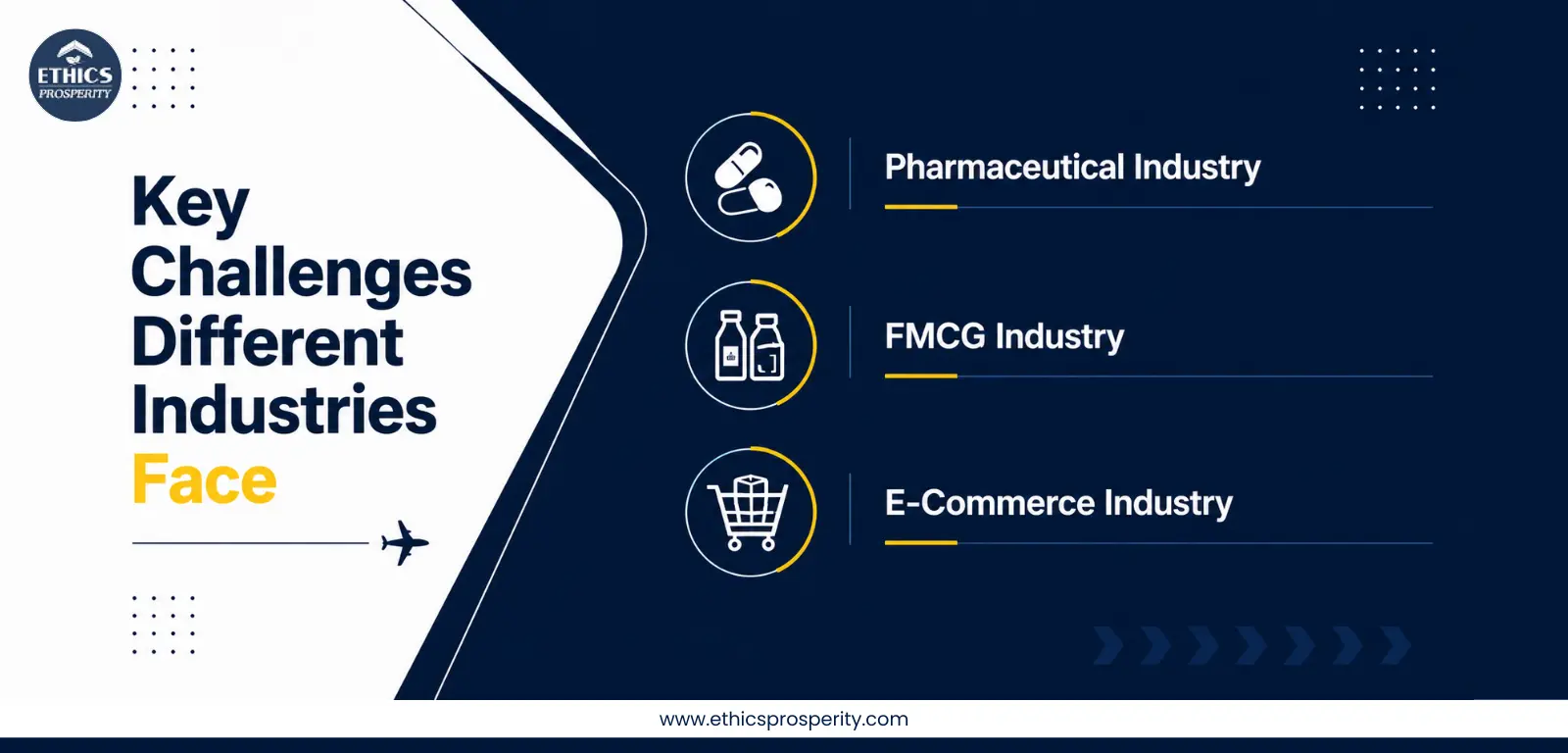
Although air freight provides speed, every industry has different operational priorities. Selecting the right transportation strategy requires understanding these unique challenges rather than applying a one-size-fits-all logistics model.
Pharmaceutical Industry
Healthcare supply chains operate under strict regulatory requirements. Medicines, vaccines, biological products, and diagnostic equipment often require temperature-controlled transportation and complete shipment traceability. Even minor delivery delays or temperature deviations may compromise product quality and compliance.
This makes Pharmaceutical Logistics in India one of the most demanding logistics segments, requiring specialized handling procedures and validated transportation processes.
FMCG Industry
The FMCG sector depends on continuous inventory movement to maintain product availability across thousands of retail locations. Short product life cycles, promotional campaigns, seasonal demand, and changing consumer preferences create significant pressure on distribution networks.
Businesses need transportation solutions capable of replenishing inventory quickly without increasing unnecessary storage costs.
E-Commerce Industry
Customer expectations continue to evolve rapidly. Fast shipping, same-day delivery, order visibility, and hassle-free fulfillment have become standard service expectations.
Large E-commerce companies operate multiple fulfillment centers and regional distribution hubs that require continuous inventory movement. During festive seasons and promotional campaigns, shipment volumes increase dramatically, making transportation planning even more critical.
Air freight helps businesses move inventory rapidly between fulfillment centers while supporting premium delivery commitments and improving customer satisfaction.
Air Freight Solutions Tailored for Pharma
The pharmaceutical industry demands one of the most controlled logistics environments. Every shipment carries significant responsibility because product quality directly affects patient safety. Temperature-sensitive medicines, vaccines, biologics, clinical trial materials, and specialty healthcare products require transportation systems that maintain product integrity throughout transit.
Tailored Air Freight Solutions for pharmaceutical businesses focus on more than speed. They emphasize compliance, temperature control, secure handling, and complete shipment visibility. A well-designed air freight strategy helps pharmaceutical manufacturers reduce transit time while minimizing risks associated with product degradation and regulatory non-compliance.
For pharmaceutical supply chains, an effective air freight solution should include:
-
Temperature-controlled cargo handling
-
Fast airport processing and priority loading
-
Regulatory documentation support
-
Continuous shipment monitoring
-
Secure handling for sensitive healthcare products
-
Emergency logistics for critical medical supplies
These capabilities enable healthcare organizations to respond quickly during product shortages, emergency healthcare requirements, and urgent hospital replenishments.
Air Freight Solutions for FMCG Businesses
Speed is one of the biggest competitive advantages in the fast-moving consumer goods sector. Products move rapidly from manufacturers to distributors, wholesalers, modern retail outlets, and regional warehouses. Any delay can create empty shelves, lost sales opportunities, and dissatisfied customers.
Customized air freight enables FMCG companies to respond quickly to changing consumer demand while maintaining inventory availability across multiple markets.
Typical business situations where air freight delivers value include:
Seasonal Demand
Festive sales, promotional campaigns, and product launches often create sudden spikes in demand. Air freight allows companies to replenish inventory much faster than conventional transportation methods.
Regional Stock Balancing
Demand rarely grows uniformly across all regions. Air transportation helps businesses move inventory from surplus locations to high-demand markets before stock shortages occur.
Product Launches
Launching a new consumer product requires synchronized inventory availability across different cities. Air freight ensures products reach distributors and retailers within planned launch schedules.
Premium Consumer Goods
High-value consumer products require secure handling and reduced transit time. Faster transportation lowers inventory exposure while improving overall supply chain responsiveness.
By integrating air freight into broader business operations, organizations strengthen inventory planning, improve retailer service levels, and reduce revenue losses caused by delayed replenishment.
Air Freight Solutions for E-Commerce Brands
Customer expectations continue to redefine logistics operations. Fast delivery, accurate order tracking, and reliable fulfillment have become key differentiators for online businesses.
Modern E-commerce operations rely on multiple fulfillment centers serving customers across different regions. During flash sales, festive seasons, and promotional campaigns, inventory often needs to move quickly between warehouses to meet unexpected demand.
Air freight provides the flexibility required to support these rapidly changing business conditions.
Typical applications include:
Inter-Warehouse Inventory Transfers
Inventory can be repositioned quickly between fulfillment centers to reduce stock shortages and improve order fulfillment performance.
Premium Delivery Services
Many online retailers offer express shipping options for premium customers. Air freight helps support these faster delivery commitments.
Marketplace Replenishment
Inventory destined for major online marketplaces can reach regional fulfillment centers much faster, improving product availability and reducing missed sales opportunities.
Business Continuity
Unexpected transportation disruptions can affect customer deliveries. Air freight provides an alternative transportation mode that helps businesses maintain service commitments during operational challenges.
For online retailers, transportation is no longer just about moving products—it directly influences customer experience, seller ratings, and repeat business.
Benefits of Customized Air Freight Solutions
Every industry operates with different operational priorities. Customized air freight solutions deliver greater value because they align transportation planning with business requirements rather than offering standardized services.
Faster Business Response
Shorter transit times allow organizations to react quickly to customer demand, production requirements, and market changes.
Improved Supply Chain Visibility
Modern shipment tracking provides real-time updates that help businesses monitor cargo movement, anticipate delays, and improve operational decision-making.
Better Inventory Optimization
Faster transportation enables companies to operate with leaner inventory while maintaining product availability across multiple distribution locations.
Reduced Business Risk
Reliable air transportation minimizes disruptions caused by delayed shipments, production stoppages, or emergency replenishment requirements.
Enhanced Customer Satisfaction
Timely deliveries improve retailer confidence, strengthen customer relationships, and support long-term business growth.
Greater Operational Flexibility
Customized air freight allows businesses to adapt transportation strategies based on product type, urgency, destination, and service requirements instead of relying on a single logistics approach.
As supply chains become increasingly interconnected, transportation decisions influence every stage of business performance—from procurement and production to distribution and customer service.
Best Practices Before Choosing an Air Freight Provider
Selecting an air freight partner should involve more than comparing freight rates. Businesses should evaluate operational capability, industry expertise, technology adoption, and network strength before making long-term logistics decisions.
Evaluate Industry Experience
Different industries require different handling procedures. Choose providers with proven experience managing pharmaceutical, FMCG, manufacturing, and ecommerce shipments.
Assess Network Coverage
A strong provider should offer extensive airport connectivity along with reliable first-mile and final-mile transportation capabilities across India.
Verify Technology Capabilities
Shipment visibility, proactive notifications, digital documentation, and performance reporting have become essential for modern logistics operations.
Understand Compliance Standards
Industries handling regulated products should ensure logistics providers follow applicable quality, safety, and regulatory requirements.
Review Service Reliability
Historical on-time performance, operational consistency, customer support, and issue resolution capabilities provide better indicators than pricing alone.
Consider Long-Term Scalability
Business growth requires logistics partners capable of supporting higher shipment volumes, expanding distribution networks, and evolving customer requirements without compromising service quality.
Selecting the right logistics partner ultimately contributes to stronger operational resilience, better customer service, and improved supply chain performance.
Conclusion
As businesses continue expanding across regional, national, and global markets, transportation is becoming a strategic business function rather than simply an operational necessity. Different industries face unique logistics challenges, and their transportation requirements cannot be addressed through standardized service models.
Customized Air Freight Solutions help pharmaceutical companies maintain product integrity, enable FMCG businesses to improve inventory availability, and support ecommerce brands in meeting growing customer expectations. By combining speed, visibility, compliance, and operational flexibility, tailored air freight services strengthen business continuity while improving responsiveness across increasingly complex distribution networks.
Organizations that invest in industry-specific logistics strategies are better positioned to manage uncertainty, reduce operational risks, and deliver consistent customer experiences. As supply chains continue evolving in 2026 and beyond, partnering with an experienced logistics provider like Ethics Prosperity can help businesses build faster, more resilient, and customer-focused transportation networks.