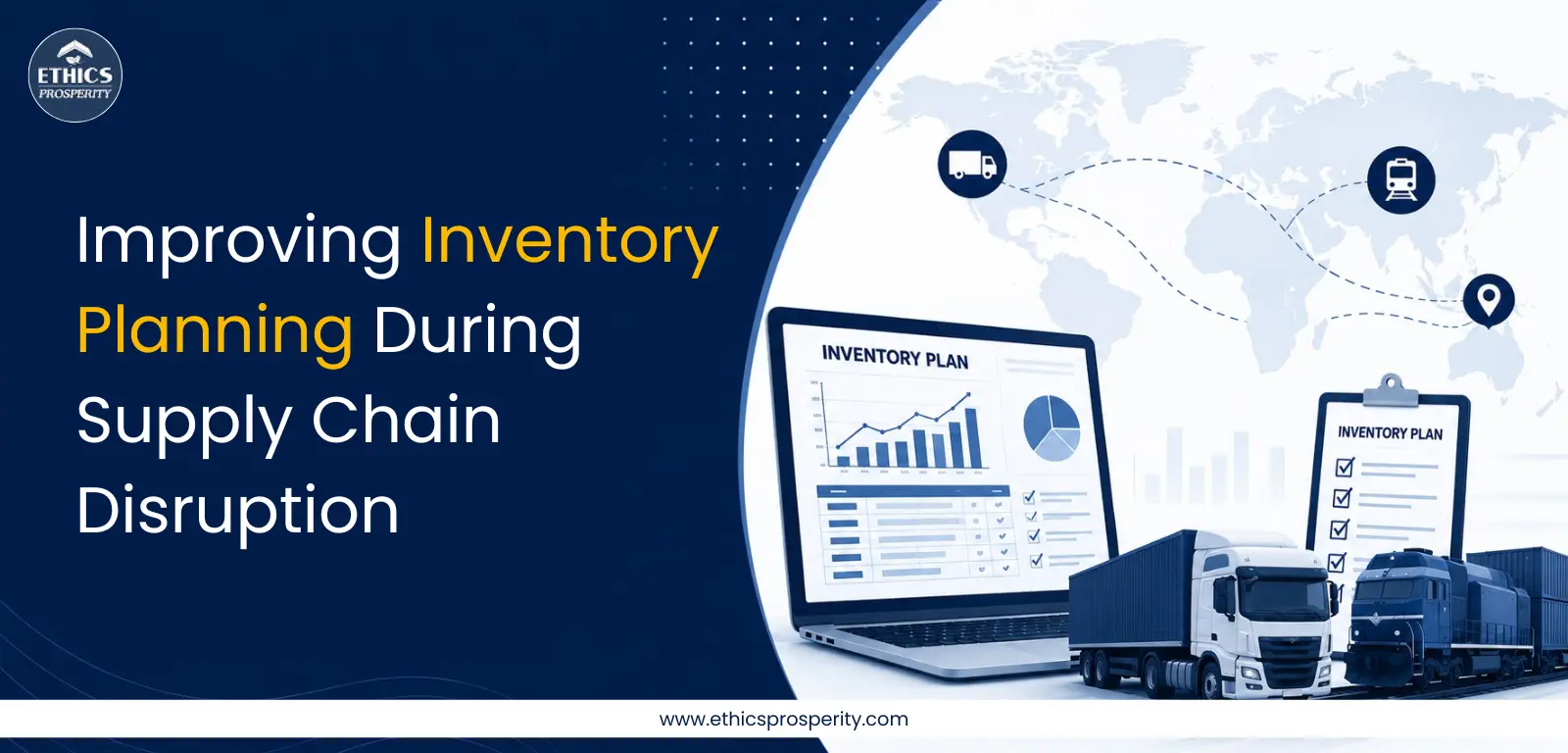
The global supply chain landscape has become increasingly volatile over the last few years. Geopolitical tensions, fluctuating consumer demand, transportation bottlenecks, extreme weather events, and economic uncertainty continue to challenge businesses across industries.
While disruptions cannot always be prevented, their impact can be significantly reduced through effective inventory planning.
For supply chain leaders, inventory planning is no longer just a stock management activity. It has evolved into a strategic business function that directly influences service levels, profitability, customer satisfaction, and operational continuity.
Organizations that fail to plan inventory effectively during disruptions often experience stockouts, excess inventory, rising carrying costs, delayed deliveries, and lost revenue opportunities. In contrast, companies with mature planning processes are better positioned to maintain service continuity while protecting margins.
This article explores practical strategies businesses can implement to strengthen inventory planning and improve resilience during supply chain disruptions.
What Is Inventory Planning in Supply Chain Management?
Inventory planning is the process of determining the right quantity of products to hold, where to store them, and when to replenish them to meet customer demand efficiently.
The goal is to balance inventory availability with operational costs while minimizing risks associated with supply fluctuations.
Effective inventory planning involves:
-
Procurement scheduling
-
Inventory allocation
-
Supplier coordination
-
Replenishment planning
-
Inventory visibility
-
Risk assessment
Within modern Supply Chain Management, inventory planning acts as the link between customer demand and operational execution.
Businesses that maintain accurate inventory levels can improve responsiveness while avoiding unnecessary capital lock-up.
Common Causes of Supply Chain Disruptions
Supply chain disruptions can originate from multiple internal and external factors.
Some of the most common causes include:
Supplier Instability
Supplier shortages, production delays, quality issues, or financial challenges can interrupt inventory replenishment cycles.
Transportation Constraints
Unexpected delays in freight movement can affect inbound inventory availability. Efficient Transportation Solutions play a critical role in minimizing these risks.
Demand Volatility
Rapid changes in customer purchasing behavior create forecasting challenges, particularly in industries such as Retail, ecommerce, and Quick Commerce.
Geopolitical and Economic Events
Trade restrictions, tariff changes, economic downturns, and political instability can significantly affect procurement and inventory availability.
Natural Disasters and Climate Events
Floods, storms, droughts, and other environmental disruptions can impact production facilities, supplier networks, and logistics infrastructure.
Key Challenges Businesses Face in Inventory Planning During Disruptions
Limited Visibility Across the Supply Chain
Many organizations still operate with fragmented systems that provide limited visibility into inventory levels, supplier performance, and shipment status.
Without real-time insights, decision-making becomes reactive rather than proactive.
Forecasting Inaccuracy
Traditional forecasting models often struggle during periods of uncertainty because historical data alone may not reflect current market realities.
This leads to excess inventory or critical stock shortages.
Supplier Dependency
Businesses that rely heavily on a single supplier face significant risk when disruptions occur.
Supplier diversification has become increasingly important for resilience.
Balancing Inventory Costs and Availability
Maintaining higher inventory levels may improve service continuity but also increases carrying costs, storage expenses, and working capital requirements.
Finding the right balance remains a major challenge.
Inventory Obsolescence
Products with shorter life cycles are particularly vulnerable to becoming obsolete during periods of disrupted demand.
This challenge is especially relevant in consumer goods and technology sectors.
Strategies for Improving Inventory Planning During Supply Chain Disruption
1. Strengthen Demand Forecasting Capabilities
Accurate forecasting remains the foundation of effective inventory planning.
Organizations should combine historical data with real-time market intelligence, customer trends, and external economic indicators.
Advanced forecasting tools powered by Predictive Analytics enable businesses to anticipate demand fluctuations more effectively and make proactive inventory decisions.
Modern forecasting models should be reviewed frequently during disruption periods rather than relying solely on monthly planning cycles.
2. Increase Supply Chain Visibility
Visibility enables businesses to identify potential risks before they impact operations.
Integrated digital platforms can provide real-time insights into:
-
Inventory positions
-
Supplier performance
-
Shipment status
-
Order fulfillment progress
-
Procurement timelines
Improved visibility supports faster decision-making and reduces uncertainty across Business Operations.
Organizations pursuing end-to-end supply chain management often prioritize visibility initiatives to improve operational resilience.
3. Diversify Supplier Networks
Supplier diversification reduces dependency risks and improves flexibility during disruptions.
Businesses should evaluate:
-
Secondary suppliers
-
Regional sourcing options
-
Backup procurement channels
-
Strategic supplier partnerships
Many leading Supply Chain companies now incorporate supplier risk assessments into their planning frameworks.
Diversification does not eliminate risk entirely but significantly improves recovery capabilities.
4. Use Technology for Inventory Intelligence
Technology has become a critical enabler of modern inventory planning.
Advanced solutions such as:
-
AI-powered forecasting tools
-
Inventory optimization platforms
-
Control tower systems
-
Digital twins
-
Automation software
allow organizations to make faster and more accurate planning decisions.
The growing adoption of AI & Machine Learning is transforming how businesses predict demand, manage risk, and optimize stock levels.
5. Build Strategic Safety Stock
Safety stock serves as a buffer against uncertainty.
However, simply increasing inventory is not always the right approach.
Organizations should calculate safety stock based on:
-
Supplier lead times
-
Demand variability
-
Service-level requirements
-
Product criticality
This approach improves resilience while supporting efficient Inventory Management practices.
The Role of Supply Chain Resilience in Inventory Planning
Resilience refers to a supply chain's ability to anticipate, respond to, and recover from disruptions.
Inventory planning is one of the most important components of resilience because inventory serves as the operational buffer between supply uncertainty and customer demand.
A resilient organization typically demonstrates:
-
Strong supplier collaboration
-
Advanced planning capabilities
-
Inventory visibility
-
Flexible sourcing strategies
-
Data-driven decision-making
Companies investing in Supply Chain Strategy initiatives increasingly view resilience as a competitive advantage rather than simply a risk-management function.
Best Practices for Long-Term Inventory Optimization
Develop Cross-Functional Planning Teams
Inventory planning should involve collaboration across procurement, sales, finance, operations, and logistics teams.
Cross-functional alignment improves decision quality and forecasting accuracy.
Monitor Inventory Performance Metrics
Businesses should regularly track:
-
Inventory turnover
-
Fill rate
-
Stockout frequency
-
Days of inventory on hand
-
Forecast accuracy
These metrics help identify improvement opportunities and support continuous optimization.
Create Scenario-Based Planning Models
Scenario planning allows organizations to prepare for multiple disruption outcomes.
Businesses can develop contingency plans for:
-
Supplier failures
-
Demand surges
-
Transportation delays
-
Economic downturns
This proactive approach improves operational preparedness.
Invest in Digital Inventory Systems
Modern Warehouse Management platforms improve inventory visibility, replenishment planning, and operational efficiency.
Organizations should also evaluate broader Logistics Solutions that integrate planning, transportation, and fulfillment operations.
Focus on Sustainable Inventory Practices
Inventory planning should support long-term business objectives, including sustainability in Supply Chain initiatives.
Reducing excess stock, minimizing waste, and improving replenishment accuracy contribute to both environmental and financial performance.
Industry Applications of Effective Inventory Planning
Inventory planning plays a critical role across multiple sectors.
In FMCG in Supply Chain, accurate planning helps manage fast-moving inventory and reduce stockouts.
For ecommerce businesses, effective inventory allocation supports efficient Distribution and customer fulfillment.
Manufacturing companies rely on inventory planning to maintain production continuity and coordinate End-to-End Logistics activities.
Healthcare organizations require precise inventory control to ensure product availability while minimizing waste and compliance risks.
Businesses evaluating logistics companies for outsourcing partnerships increasingly consider inventory planning capabilities as a key selection criterion.
Conclusion
Supply chain disruptions are no longer rare events. They have become a persistent reality that businesses must prepare for proactively.
Strong inventory planning enables organizations to balance customer demand, inventory availability, operational efficiency, and risk management during periods of uncertainty.
By improving forecasting accuracy, increasing supply chain visibility, diversifying suppliers, leveraging technology, and building resilience into planning processes, businesses can protect service levels while maintaining profitability.
As supply chains become more complex in 2026 and beyond, organizations that invest in strategic inventory planning will be better positioned to adapt, compete, and grow in an increasingly unpredictable marketplace.
At Ethics Prosperity, we believe that resilient inventory planning is not just about managing stock—it is about creating a stronger, more agile supply chain capable of supporting long-term business success.