In today’s highly competitive and fast-moving business environment, operational efficiency plays a crucial role in determining long-term success. Businesses are no longer competing only on product quality or pricing—they are competing on delivery speed, inventory accuracy, customer experience, and supply chain agility.
This shift has significantly increased the importance of storage and fulfillment services across industries, especially for e-commerce, retail, manufacturing, and distribution businesses. As customer expectations continue to evolve, organizations must build scalable logistics ecosystems that support faster deliveries, seamless inventory flow, and efficient order processing.
Modern fulfillment operations are now deeply integrated into broader End-to-End Supply Chain Management strategies, helping businesses streamline logistics operations and improve overall supply chain performance.
From startups to enterprise-level organizations, businesses are increasingly partnering with fulfillment providers to optimize storage, warehousing, transportation, and delivery operations while focusing on core growth activities.
What Are Storage and Fulfillment Services?
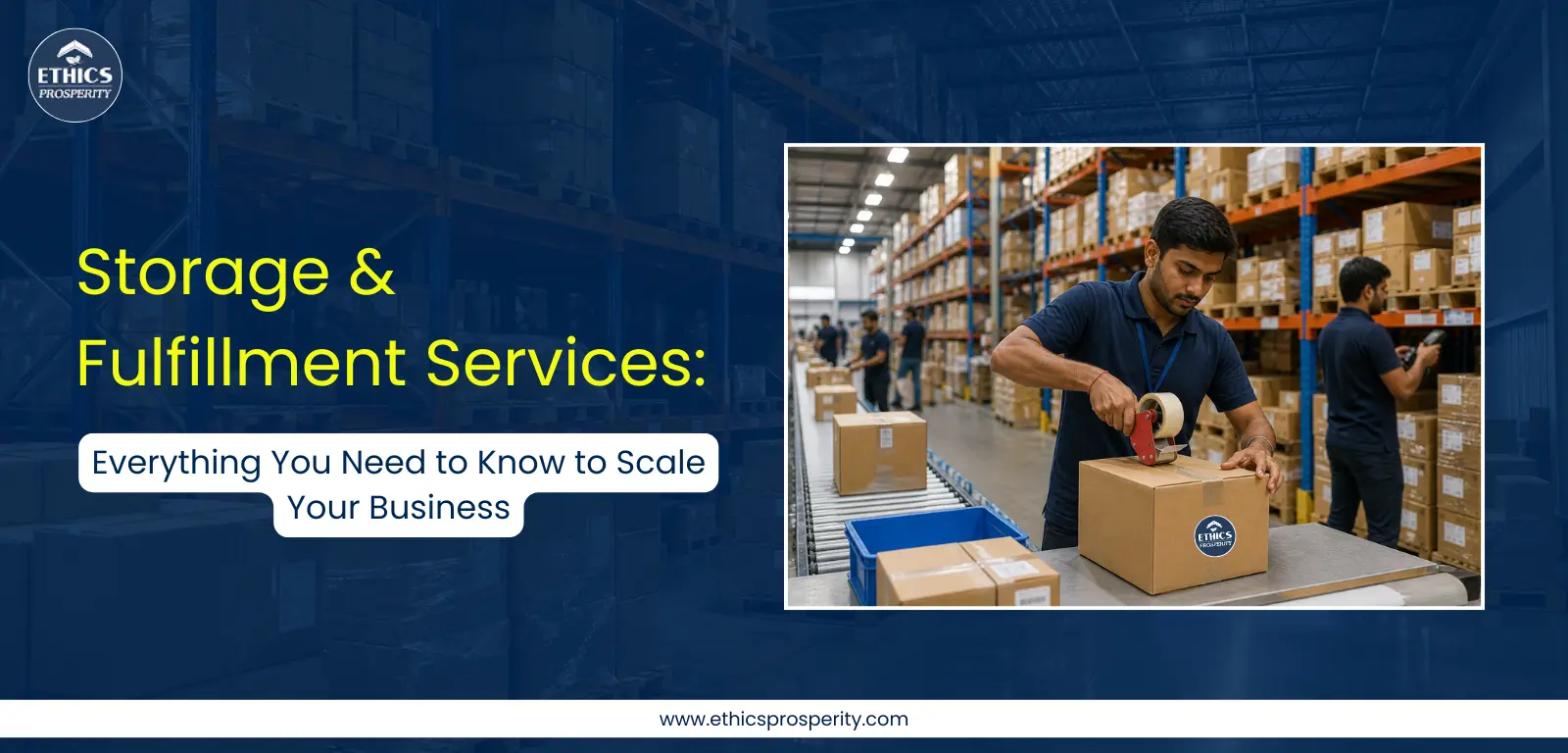
Storage and fulfillment services refer to logistics solutions that manage inventory storage, order processing, packaging, shipping, and returns handling for businesses.
These services help organizations efficiently store products in warehouses and ensure timely delivery to customers through optimized logistics networks.
The process typically includes:
-
Inventory receiving
-
Product storage
-
Order processing
-
Picking and packing
-
Shipping and delivery
-
Returns management
Modern Warehousing and fulfillment systems are powered by advanced technology and integrated logistics platforms that improve visibility, operational efficiency, and scalability.
Businesses working with E-commerce Fulfillment Companies in India often rely on fulfillment partners to manage growing order volumes, improve delivery speed, and reduce operational complexity.
How Fulfillment Services Work
1. Inventory Receiving and Storage
Products are received at fulfillment centers and stored systematically based on product category, demand patterns, and operational requirements.
Modern warehouses use advanced Inventory management systems to maintain stock visibility and optimize storage utilization.
2. Order Processing
When customers place orders, the fulfillment system automatically processes them and prepares them for dispatch.
This stage is highly dependent on technologies such as Warehouse Management System(WMS), which streamline workflows and improve operational accuracy.
3. Picking and Packing
Warehouse teams or automated systems pick products from storage locations and pack them according to shipping requirements.
This process directly impacts delivery speed, accuracy, and customer satisfaction.
4. Shipping and Transportation
Orders are shipped through logistics networks and transportation partners.
Efficient transportation coordination plays a critical role in broader Supply Chain Management operations, especially in urban and high-demand delivery environments.
5. Last-Mile Delivery
The final stage of delivery ensures products reach end customers accurately and on time.
Businesses often evaluate strategies around Hyperlocal vs Last Mile Delivery to determine the most effective fulfillment model based on customer expectations and geography.
6. Returns and Reverse Logistics
Efficient returns handling improves customer trust and enhances operational efficiency.
Strong reverse logistics systems are becoming increasingly important in modern e-commerce fulfillment ecosystems.
Benefits of Storage and Fulfillment Services
1. Scalability for Business Growth
Fulfillment providers offer scalable infrastructure that supports business expansion without requiring significant investments in warehousing and logistics assets.
This flexibility is especially important for businesses experiencing seasonal demand spikes or rapid market growth.
2. Faster Order Fulfillment
Efficient Order Fulfillment processes improve delivery timelines and customer satisfaction.
Strategically located fulfillment centers reduce shipping distances and enhance operational efficiency.
3. Reduced Operational Costs
Outsourcing fulfillment operations helps businesses reduce warehousing, labor, and transportation expenses.
Shared infrastructure and logistics optimization contribute to better cost efficiency.
4. Improved Inventory Accuracy
Advanced inventory tracking systems help businesses maintain accurate stock levels and reduce inventory-related errors.
5. Enhanced Customer Experience
Fast and accurate deliveries improve customer trust and brand loyalty.
This is particularly important for businesses competing in highly customer-centric markets.
6. Technology-Driven Operations
Modern fulfillment providers leverage automation, analytics, and integrated platforms to improve operational performance.
7. Better Supply Chain Visibility
Integrated logistics systems provide real-time visibility into inventory, shipments, and order status.
This supports stronger decision-making across broader Supply chain services operations.
Industries That Benefit the Most
1. E-commerce and Retail
E-commerce businesses rely heavily on fulfillment services to manage inventory, shipping, and returns efficiently.
The rise of Quick Commerce Companies has further accelerated demand for faster fulfillment models.
2. FMCG and Grocery
Fast-moving consumer goods businesses require rapid inventory movement and efficient delivery operations to meet customer expectations.
3. Healthcare and Wellness
Healthcare companies require precise inventory handling, compliance management, and timely deliveries.
4. Consumer Electronics
Electronics brands depend on secure storage and efficient shipping to reduce product damage and improve customer satisfaction.
5. Automotive and Industrial Supply
Manufacturers and distributors use fulfillment services to manage spare parts, equipment, and bulk inventory efficiently.
6. Fashion and Lifestyle
Fashion brands experience fluctuating demand patterns and require agile warehousing and fulfillment operations.
Key Features to Look for in a Fulfillment Partner
1. Strong Warehouse Network
A strategically distributed warehouse network improves delivery timelines and operational efficiency.
2. Advanced Technology Integration
Businesses should evaluate providers that use modern systems, automation, and analytics for optimized operations.
3. Scalability and Flexibility
The fulfillment provider should be capable of handling rapid growth and fluctuating order volumes.
4. Transportation Capabilities
Strong logistics and transportation infrastructure are essential for reliable deliveries.
The evolving Modern trucking industry is playing a significant role in improving logistics efficiency and shipment visibility.
5. Industry Expertise
Providers with expertise in specific industries can deliver more tailored and effective solutions.
6. Support for Emerging Fulfillment Models
Businesses should assess whether providers support models such as Dark Stores and Micro-Fulfillment, which enable faster urban deliveries.
7. Omnichannel Fulfillment Capabilities
The provider should support multiple sales channels, including marketplaces, retail stores, and direct-to-consumer operations.
Understanding E-commerce Fulfillment vs Quick Commerce Fulfillment helps businesses choose the right logistics strategy based on operational requirements.
Future Trends in Fulfillment Services
1. Automation and Robotics
Automation technologies will continue transforming warehouse operations by improving efficiency, speed, and accuracy.
2. AI-Driven Decision Making
Advanced analytics and AI-powered systems will improve forecasting, inventory planning, and operational optimization.
3. Urban Fulfillment Expansion
Localized fulfillment centers will support faster deliveries and improve customer experience.
4. Hyperlocal Delivery Growth
The expansion of Hyperlocal Delivery models will reshape urban logistics and customer fulfillment expectations.
5. Integration with Advanced Logistics Models
Businesses are increasingly exploring logistics frameworks such as What is 3pl, 4pl, and 5pl to improve supply chain coordination and scalability.
6. Sustainability and Green Logistics
Companies are investing in eco-friendly warehousing and transportation practices to reduce environmental impact.
7. Rise of Specialized Fulfillment Services
Demand for niche fulfillment solutions tailored to industry-specific needs will continue increasing.
This includes advanced 3PL fulfillment services and customized Order fulfillment services for diverse product categories.
Conclusion
As businesses continue scaling across digital and omnichannel markets, efficient storage and fulfillment services have become essential for operational success.
From inventory storage and order processing to transportation and delivery optimization, fulfillment services help businesses improve efficiency, reduce costs, and enhance customer experience.
Organizations that invest in scalable and technology-driven fulfillment strategies will gain a significant competitive advantage in the evolving logistics landscape.
Ethics Prosperity empowers businesses with integrated fulfillment and logistics solutions designed to enhance operational agility, scalability, and long-term growth.