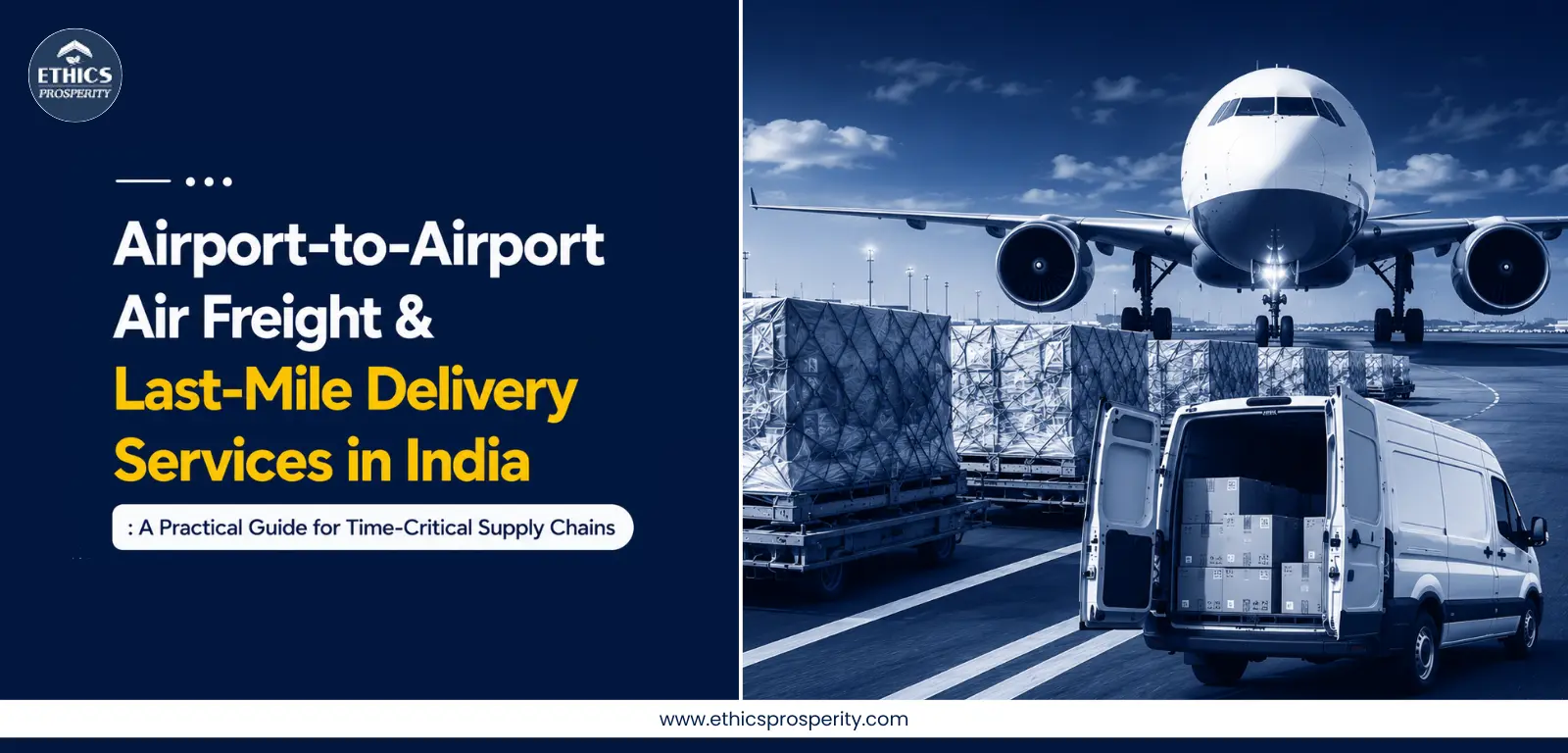
When a business moves urgent cargo by air, the shipment does not stop mattering once it reaches the destination airport. In many cases, that is where the most execution-sensitive leg begins. Cargo still needs to be moved from the airport to a plant, hospital, distributor, retail node, or customer location—often within a narrow delivery window. That is why last mile delivery service in india has become a critical capability within air freight operations, not an optional add-on.
For sectors handling urgent replenishment, high-value goods, regulated products, or service-critical spare parts, airport-to-airport transport alone solves only part of the problem. The real value lies in connecting air movement with dependable on-ground execution. When these two legs are managed in sync, businesses gain faster turnaround, tighter control over service commitments, and better continuity across their operations.
This is particularly relevant in 2026, when supply chains are operating under higher customer expectations, tighter inventory buffers, and greater pressure to improve responsiveness without increasing complexity. A well-structured airport-to-airport model, combined with dependable last-mile execution, helps businesses move from fragmented shipment handling to a more responsive and accountable logistics model.
What Is Airport-to-Airport Air Freight?
Airport-to-airport air freight refers to the movement of cargo from the origin airport to the destination airport using scheduled or chartered air cargo capacity. It is commonly used for urgent, high-value, time-sensitive, or temperature-controlled shipments where speed matters more than the economics of surface transport.
In practice, however, airport-to-airport is only one segment of the movement. Most businesses do not operate from airport premises. Their cargo needs to move from a factory, warehouse, or supplier location to the departure airport, and then from the arrival airport to the final destination. This is where integrated execution becomes important.
For B2B operations, airport-to-airport freight is most effective when it is planned as part of a broader End-to-end supply chain strategy rather than treated as a stand-alone transportation activity. The cargo handoffs before departure and after arrival often determine whether the shipment reaches production on time, supports a sales order, or prevents a service disruption.
Why Last-Mile Delivery Matters in Air Freight
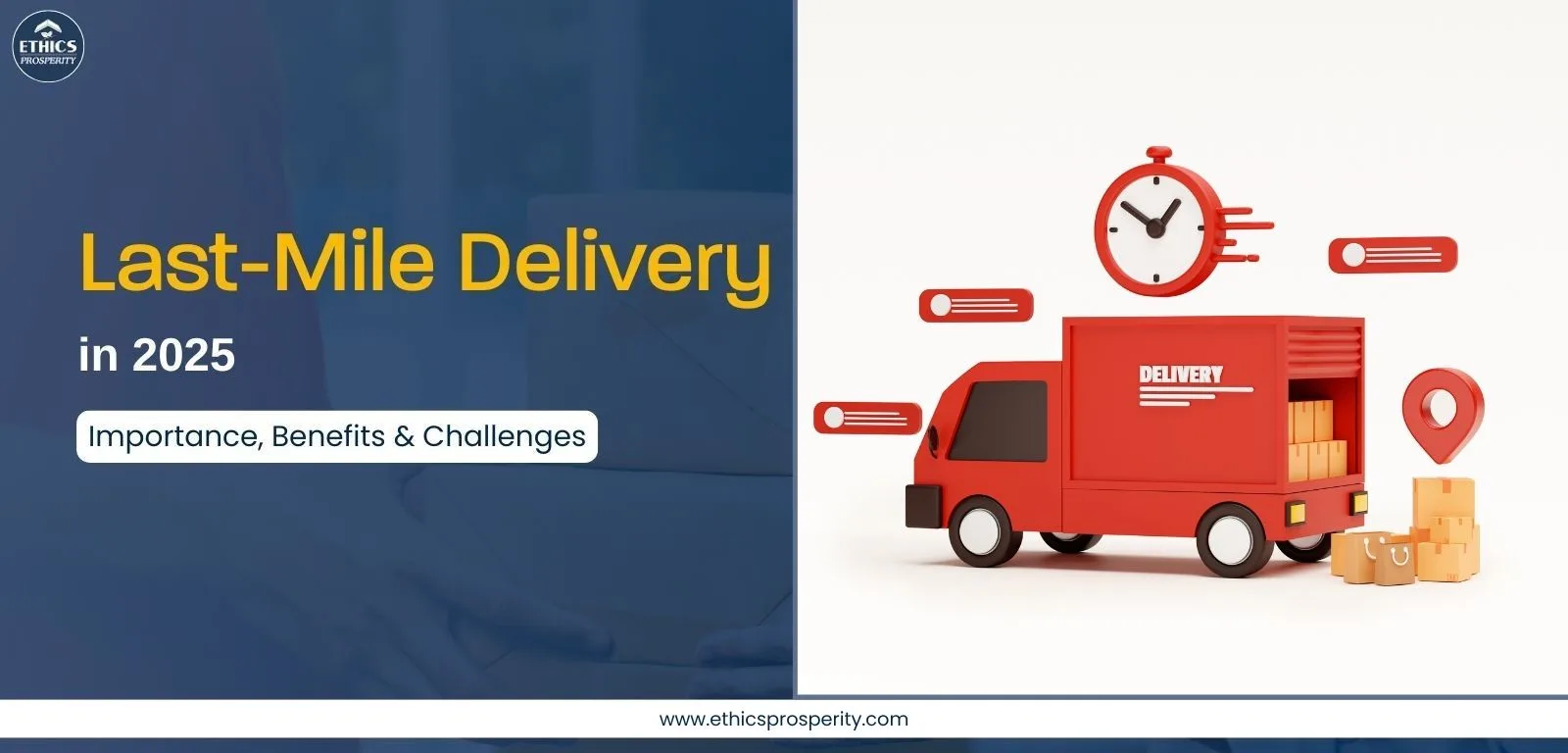
Many logistics delays do not happen in the air. They happen after the shipment lands—during cargo release, dispatch planning, destination handling, and final delivery coordination. For that reason, last-mile execution has a direct impact on the actual business outcome of an air shipment.
A fast air movement loses much of its value if the cargo then waits at the airport for vehicle allocation, documentation clearance, or delivery coordination. In sectors such as healthcare, electronics, manufacturing, and modern retail, even a short delay at this stage can disrupt production schedules, delay store replenishment, or impact patient-critical deliveries.
This is why businesses increasingly evaluate air freight providers not only on flight access, but on their ability to execute a reliable last-mile network. A strong last mile delivery service in india bridges the gap between airport arrival and final business delivery with defined processes, visibility, and escalation control.
From an operational standpoint, this is also where Logistics Management becomes more outcome-driven. The objective is not just to move cargo; it is to ensure the cargo reaches the right location, in the right condition, within the committed time window, with minimal exception handling.
Key Benefits of Airport-to-Airport Air Freight with Last-Mile Delivery
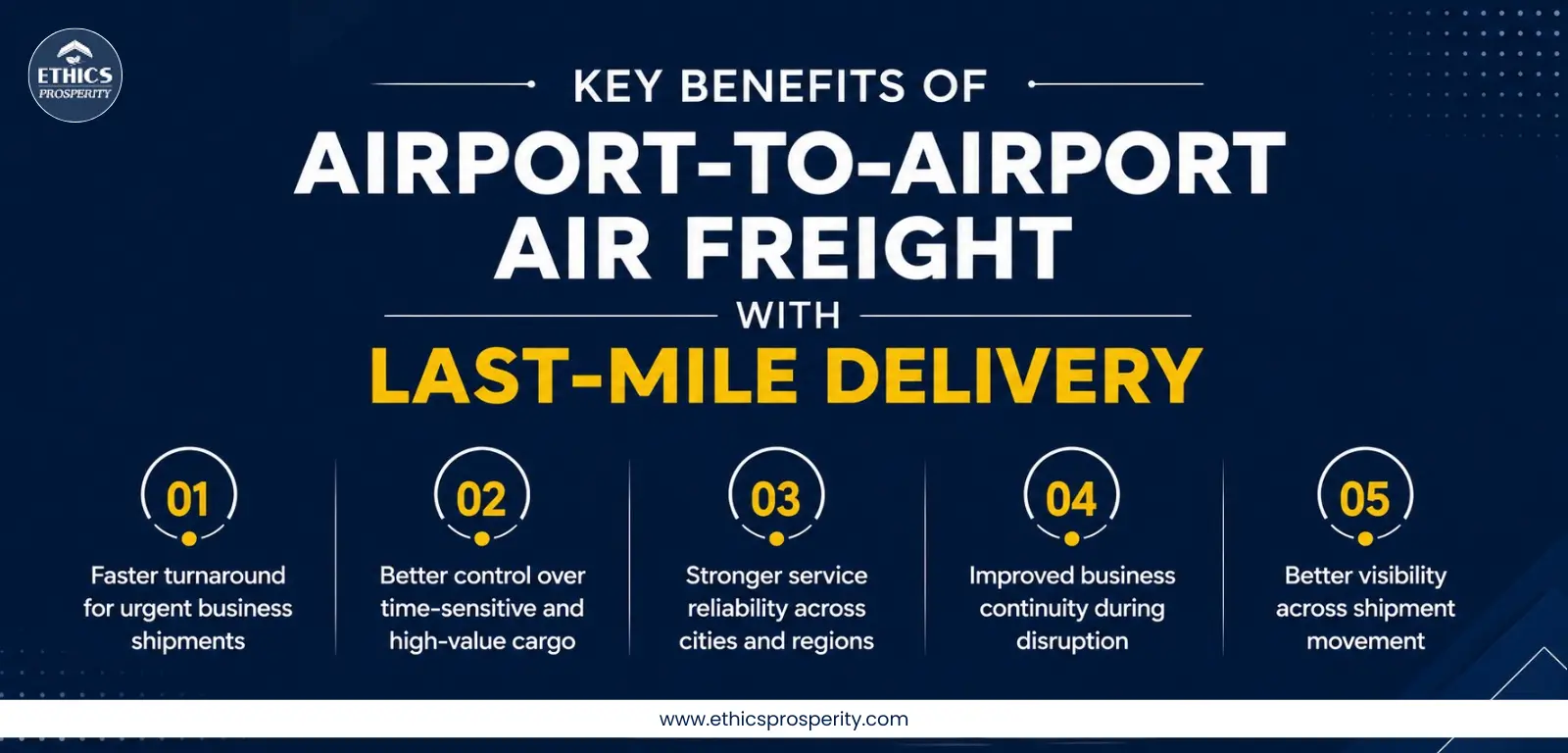
1. Faster turnaround for urgent business shipments
When airport movement and destination delivery are managed under a coordinated model, businesses reduce idle time between flight arrival and final dispatch. This is especially valuable for urgent replenishment, stock transfer, project cargo components, and service-critical spare parts.
2. Better control over time-sensitive and high-value cargo
A single accountable logistics flow improves handoff management and reduces the risk of cargo sitting unmonitored at transition points. For businesses shipping electronics, medical products, precision components, or regulated goods, this control is operationally important.
3. Stronger service reliability across cities and regions
Air freight linked with destination delivery helps companies serve customers, plants, channel partners, and distribution points beyond the airport city. This matters for businesses expanding into tier-2 and tier-3 demand markets, where execution consistency often becomes a differentiator.
4. Improved business continuity during disruption
When surface routes are delayed or lead times become unpredictable, air freight with destination delivery provides a faster recovery option. It is often used for emergency stock transfers, launch support, line-down situations, and high-priority customer commitments.
5. Better visibility across shipment movement
Integrated operations reduce blind spots between transport legs. For businesses focused on Supply chain management, this visibility supports faster escalation, more accurate customer updates, and better coordination between logistics, procurement, sales, and operations teams.
Industries That Benefit Most
Pharmaceuticals and healthcare
Air freight combined with controlled destination delivery is highly relevant for Pharmaceutical Logistics in India, where speed, product integrity, and compliance are critical. Vaccines, specialty medicines, diagnostic materials, surgical kits, and temperature-sensitive products often require tightly managed movement from airport to hospital, distributor, or healthcare facility. This is also where Cold chain logistics capability becomes essential, especially for products that cannot tolerate temperature excursions during the final leg.
Automotive and industrial manufacturing
Manufacturers often use air freight for urgent spare parts, imported components, tooling, or line-critical materials. If the cargo reaches the airport on time but not the plant gate, the business problem remains unsolved. Integrated destination delivery helps protect production continuity and reduce the cost of downtime.
Retail, ecommerce, and omni-channel replenishment
Air freight is increasingly used for urgent inventory balancing, launch inventory, festive stock movement, and fast replenishment across regional hubs. For modern retail and ecommerce businesses, a coordinated last-mile model helps move cargo quickly from airport to dark store, micro-fulfillment node, distribution center, or retail outlet. In some cases, this overlaps with Hyperlocal Delivery strategies where speed to destination directly affects customer experience and sales conversion.
Electronics, telecom, and high-value goods
Products with high unit value or short demand cycles benefit from air movement supported by secure destination delivery. Faster availability improves sell-through, protects launch timelines, and reduces exposure to stock-outs in priority markets.
What to Look for in an Air Freight Logistics Partner
Airport network strength and destination reach
A capable partner should have access to key cargo airports, a dependable linehaul and delivery network, and the ability to serve not just metros but downstream business destinations. This is one of the most practical ways to assess whether a provider can support both air movement and final delivery execution.
Time-definite delivery capability
For business-critical cargo, “fast” is not enough. What matters is whether the provider can commit to cut-off adherence, airport handling timelines, dispatch planning, and destination delivery windows with operational discipline.
Handling expertise for specialized cargo
Different shipments require different handling standards. Temperature-sensitive pharma, fragile electronics, retail launches, and industrial components each demand specific SOPs. Businesses should assess a provider’s process maturity, escalation readiness, and compliance standards before onboarding.
Technology-led visibility and exception control
Modern shippers increasingly expect milestone visibility, proactive alerts, POD updates, and escalation transparency. This is where digitally enabled Logistics solutions create measurable value for B2B customers.
Operational integration with warehousing and inventory flows
Air freight does not operate in isolation. It often connects with storage, order processing, inventory positioning, and replenishment planning. A provider that understands the upstream and downstream impact of cargo movement is better equipped to support decision-making across the broader network, especially for companies working with multiple distribution nodes or warehouse companies in India.
Common Operational Challenges in Air Freight and Last-Mile Execution
Even when the model is strategically sound, execution can fail if operational realities are ignored. Some of the most common Transportation Logistic Challenges and Solutions in this segment include flight dependency, airport cut-off restrictions, documentation gaps, destination handling delays, vehicle shortages, and weak handoff coordination.
Temperature-sensitive cargo presents another layer of risk. A shipment may travel safely by air but still be compromised if the post-arrival handling environment is uncontrolled or if delivery vehicles are not equipped appropriately. This is particularly relevant in healthcare, food-adjacent, and specialty chemical supply chains.
Another recurring challenge is fragmented visibility. If airport operations, transporter dispatch, customer communication, and proof-of-delivery updates sit across disconnected systems, exception management becomes slow. This is why more businesses are moving toward integrated control models rather than vendor-by-vendor execution.
How Technology Is Reshaping Air Freight and Last-Mile Delivery in 2026
Technology is changing how air freight and final-mile delivery are planned, monitored, and optimized. For B2B shippers, the value is no longer limited to tracking a shipment. The real shift is toward faster decisions, better exception management, and improved predictability.
AI in Logistics is being used to improve route planning, prioritize urgent dispatches, forecast delivery risk, and support capacity allocation decisions during peak demand periods. At the operational level, connected sensors and IoT devices are helping teams monitor location, movement conditions, and shipment status across handoff points.
At warehouse and fulfillment nodes, integration with a Warehouse Management System can improve cargo readiness, staging accuracy, and dispatch synchronization with airport cut-offs. This matters because one delayed pick or loading miss at origin can affect the entire downstream movement.
The broader shift also reflects changing Supply chain trends in India: lower tolerance for inventory delays, greater need for visibility, tighter compliance requirements, and a growing expectation that logistics partners contribute to resilience—not just transportation capacity.
At the same time, businesses are re-evaluating how they work with supply chain companies and Last-Mile Delivery Companies in India. The market is moving away from fragmented execution and toward accountable partners who can connect warehousing, airport handling, transport planning, and final delivery under one service model.
Conclusion
Airport-to-airport air freight remains one of the most effective options for urgent, high-value, and business-critical cargo movement. But in practical supply chain execution, the shipment is only as successful as its final delivery. If cargo reaches the airport quickly but fails to reach the plant, distributor, hospital, or customer on time, the service promise is incomplete.
That is why businesses should evaluate air freight not as an isolated mode, but as part of a connected operating model that links airport movement with disciplined last-mile execution, visibility, compliance, and destination control. For companies looking to improve responsiveness, reduce disruption risk, and strengthen service performance across critical cargo flows, a well-designed airport-to-airport model with reliable final-mile support can deliver measurable business value. With the right operating partner and process design, organizations can build a more resilient and responsive logistics network—and that is exactly where a strategic supply chain partner like Ethics Prosperity can add value.