In today’s global economy, logistics costs account for 10 to 14% of business expenditure, making efficiency essential. Logistics Management ensures smooth operations across procurement, transportation, warehousing, distribution, and delivery in industries like manufacturing, retail, e-commerce, and pharmaceuticals. With rising demand for faster deliveries, over 70% of businesses now use digital systems, and modern Supply Chain Management integrates planning, execution, and optimization to reduce lead times while improving cost efficiency, speed, and reliability.
What Is Logistics Management?
Logistics goes beyond moving goods; it is the strategic process of planning, executing, and controlling the flow and storage of products, services, and information from origin to customer. Logistics Management connects suppliers, manufacturers, warehouses, transporters, and customers into a coordinated system, ensuring speed, accuracy, and cost efficiency. By integrating transportation, Warehouse Operations, Inventory Management, packaging, and distribution, it ensures the right product reaches the right place at the right time in the right condition. In today’s competitive market, effective logistics transforms supply chains into agile, value driven networks that scale with demand and consistently deliver customer satisfaction.
Core Functions of Logistics Management
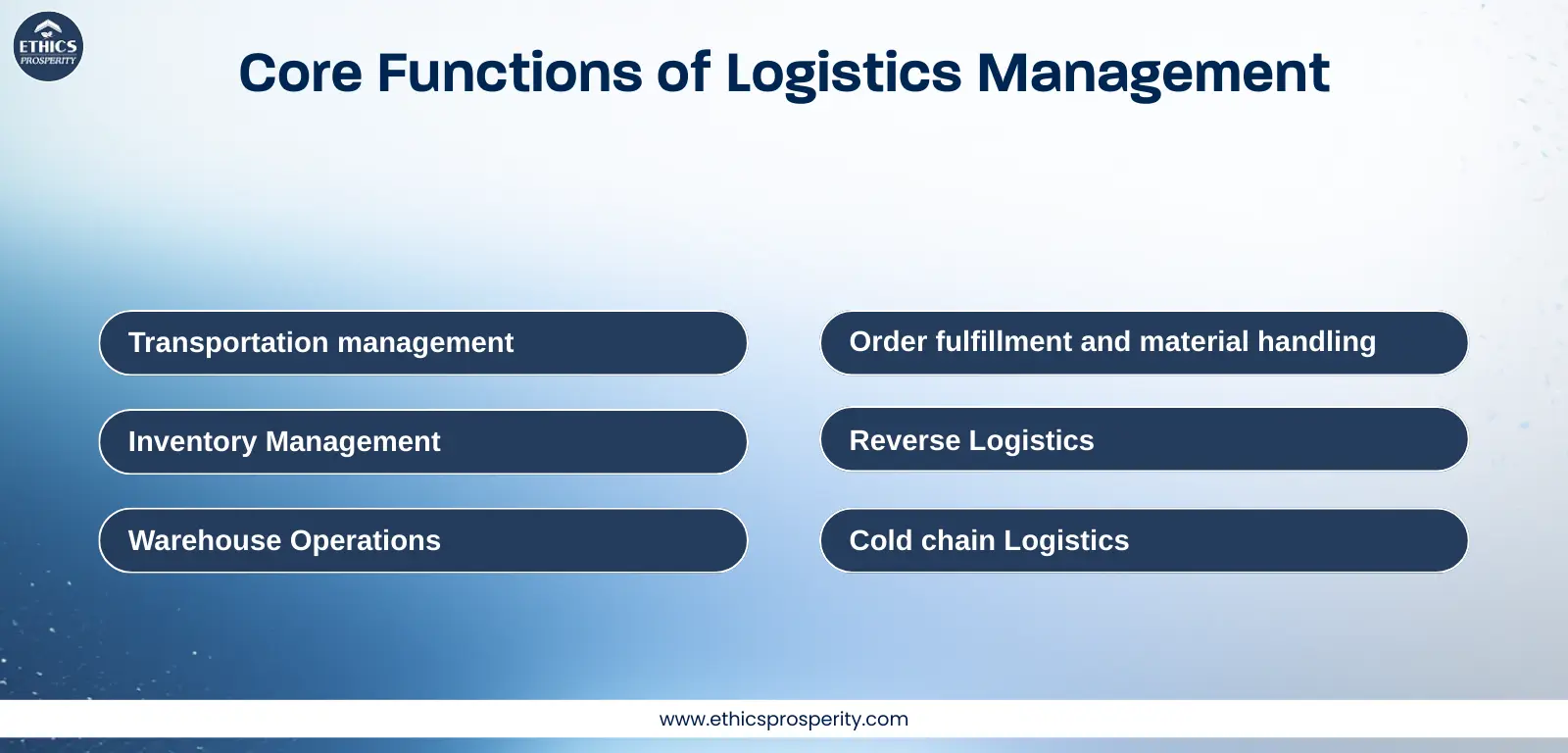
To understand What is Logistics, it is important to see its role in managing the flow of goods and information within Supply Chain Management. Logistics connects suppliers, manufacturers, and customers while ensuring efficiency, reliability, and cost control.
Core Functions:
-
Transportation management –This function focuses on moving goods efficiently across regions, supporting timely deliveries and cost optimization for B2B logistics Companies in India and global networks.
-
Inventory Management – Effective Inventory Management maintains optimal stock levels, reducing carrying costs while ensuring product availability across the supply chain.
-
Warehouse Operations – Modern Warehouse Operations rely on a Warehouse Management System and AI in Logistics to improve storage efficiency, accuracy, and order processing speed.
-
Order fulfillment and material handling – This function manages picking, packing, and dispatch, using automation to improve productivity and service quality delivered by the Best Logistics Companies.
-
Reverse Logistics – Reverse Logistics handles product returns, recycling, and disposal, supporting sustainability and customer satisfaction.
-
Cold chain Logistics – Cold chain Logistics ensures safe storage and transportation of temperature-sensitive goods, preserving quality and regulatory compliance.
Together, these core functions form the foundation of effective logistics management, enabling organizations to build resilient supply chains, support growth, and deliver consistent value in an increasingly competitive logistics landscape.
Benefits of Effective Logistics Management
Effective Logistics Management is essential for ensuring smooth operations and long-term business success within the broader Supply Chain. When managed efficiently, logistics delivers strong operational, financial, and customer-focused benefits.
Benefits:
-
Improved operational efficiency – Streamlined Transportation, Warehouse Operations, and Inventory Management reduce delays, minimize errors, and enhance overall productivity.
-
Cost optimization – Efficient logistics planning helps control transportation costs, reduce excess inventory, and optimize warehouse space, leading to better cost efficiency.
-
Enhanced customer satisfaction – Accurate order fulfillment, faster deliveries, and improved visibility strengthen Customer Satisfaction and brand reliability.
-
Greater supply chain visibility – Technology-enabled logistics, supported by AI in Logistics and a Warehouse Management System, provides real-time tracking and data-driven insights.
-
Scalability and business growth – Well-structured logistics systems allow businesses to scale operations smoothly while adapting to changing market demands.
-
Risk mitigation and resilience – Proactive logistics planning reduces disruptions and strengthens supply chain continuity during uncertainties.
Together, these benefits help organizations build resilient, efficient, and competitive supply chains in today’s dynamic business environment.
Logistics Management Strategy: How to Build One That Works
A strong Logistics Management Strategy ensures efficient movement of goods, cost control, and consistent service across the Supply Chain. It aligns operations with business goals while adapting to changing market demands.
-
Set clear objectives – Identify priorities like cost reduction, faster deliveries, or improved customer satisfaction to guide logistics decisions.
-
Optimize inventory and warehouse operations – Efficient Inventory Management and Warehouse Operations, supported by a Warehouse Management System and automation, improve accuracy, space utilization, and order fulfillment.
-
Leverage technology – AI in Logistics and digital tools enable smarter forecasting, route optimization, and real-time tracking, boosting efficiency and decision-making.
-
Improve transportation and visibility – Optimize routes, manage last mile delivery, and maintain strong coordination with suppliers and customers for seamless operations.
-
Measure and refine – Track key metrics such as delivery times, costs, and order accuracy to continuously improve performance.
By combining clear goals, streamlined processes, and the right technology, businesses can create a logistics strategy that is efficient, scalable, and resilient.
Common Logistics Management Challenges
Managing logistics effectively is critical, but organizations often face several challenges that can affect the efficiency of their Supply Chain Management. Understanding these challenges helps businesses plan better and implement solutions proactively.
Rising operational costs – Fluctuating fuel prices, labor costs, and inefficient processes can increase transportation and warehousing expenses, affecting overall profitability.
Inventory and warehouse management issues – Poor Inventory Management and disorganized Warehouse Operations can lead to stockouts, overstocking, or delayed order fulfillment, impacting service levels.
Technology adoption and integration – Implementing AI in Logistics, a Warehouse Management System, or other automation tools can be costly and complex. Integrating new technology with legacy systems can also pose challenges.
Transportation and last mile delivery – Managing timely deliveries, optimizing routes, and handling Cold Chain Logistics or other specialized transport requirements adds complexity to logistics operations.
Supply chain disruptions – Unexpected events such as natural disasters, supplier delays, or regulatory changes can disrupt the flow of goods, requiring agile planning and Reverse Logistics strategies.
By identifying these challenges early, businesses can adopt best practices, leverage technology, and collaborate effectively with partners, including B2B logistics Companies in India and the Best Logistics Companies, to build resilient and efficient supply chains.
Future Trends in Logistics Management
The logistics industry is rapidly evolving, driven by technology, customer expectations, and global market demands. Future trends in Logistics Management will focus on efficiency, automation, and smart decision-making across the Supply Chain.
-
AI in Logistics and automation – AI will optimize Warehouse Operations, Inventory Management, and route planning through intelligent systems and Warehouse Management Systems.
-
Real-time visibility and digitalization – IOT and advanced tracking tools will provide instant insights into shipments, inventory, and fleet performance, improving decision-making and customer satisfaction.
-
Sustainability and green logistics – Companies will adopt eco-friendly transport, optimize routes, and enhance Cold Chain Logistics to reduce their carbon footprint.
-
Advanced last mile delivery – Autonomous vehicles, drones, and AI-driven routes will make last mile delivery faster, more reliable, and cost-efficient.
-
Collaboration and integration – Strong coordination across suppliers, distributors, and B2B logistics Companies in India will improve Reverse Logistics and build resilient, customer-focused supply chains.
By adopting these trends, businesses can create adaptive, efficient, and intelligent logistics networks that compete with the Best Logistics Companies.
Conclusion
Mastering Logistics Management is essential in a world driven by speed, precision, and reliability. With smart Warehouse Operations, optimized Inventory Management, and AI in Logistics, businesses can turn supply chains into engines of growth.
At Ethics Prosperity, we combine innovation with principled practices to help organizations build resilient, customer focused, and future ready supply chains. By aligning technology, strategy, and operational excellence, we support businesses in achieving long term value and success.