In today’s rapidly evolving logistics ecosystem, warehousing plays a critical role in ensuring efficient product movement and customer satisfaction. As businesses expand across channels, understanding the difference between B2B and B2C Warehousing becomes essential for optimizing operations.
Modern supply chains are no longer linear—they are dynamic, customer-centric, and technology-driven. Within End-to-End Supply Chain Management, warehousing strategies must align with delivery expectations, order volumes, and customer behavior.
With the rise of e-commerce, Quick Commerce Companies, and changing consumer demands, businesses must adopt flexible and scalable warehousing models to remain competitive.
What is a B2C Warehouse?
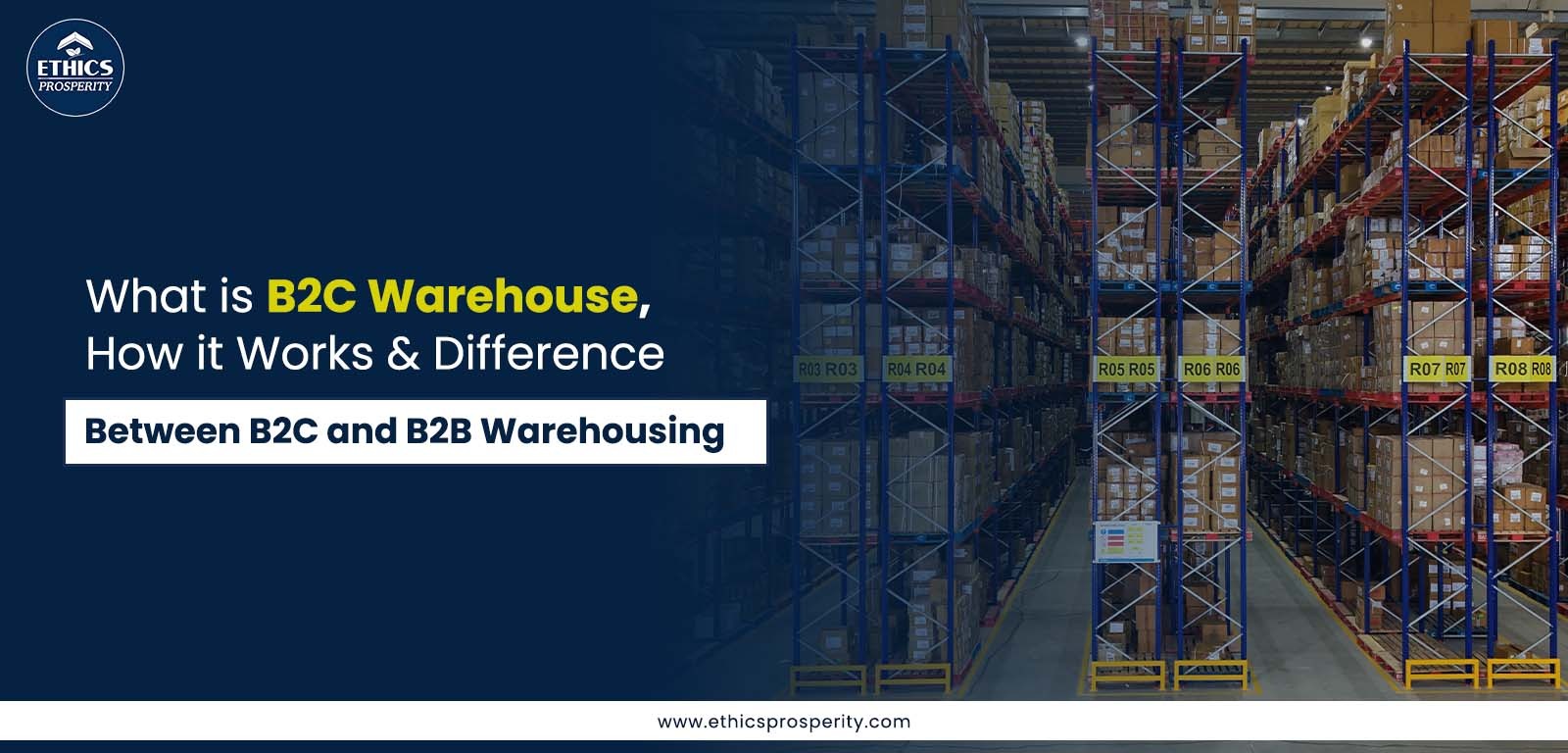
A B2C (Business-to-Consumer) warehouse is designed to fulfill individual customer orders directly. Unlike traditional bulk distribution, B2C warehousing focuses on handling high volumes of smaller, diverse orders.
This model is widely used in e-commerce, retail, and direct-to-consumer businesses, where speed, accuracy, and customer experience are critical.
B2C warehouses are typically integrated with an advanced Warehouse Management System(WMS) and digital platforms to manage order processing, picking, packing, and shipping efficiently.
Key Characteristics of B2C Warehousing
1. High Order Volume
B2C warehouses handle a large number of small orders, requiring efficient processing systems.
2. Fast Order Fulfillment
Speed is critical, especially with the increasing demand for same-day or next-day delivery.
3. Advanced Inventory Management
Efficient inventory management ensures product availability and reduces stockouts.
4. Technology-Driven Operations
B2C warehousing relies on Smart Warehousing practices, including warehouse automation, to improve efficiency and accuracy.
5. Customer-Centric Approach
Operations are designed to enhance customer experience, from order placement to delivery.
How a B2C Warehouse Works
1. Order Placement
Customers place orders through online platforms or marketplaces.
2. Order Processing
Orders are processed using integrated systems, ensuring accuracy and speed.
3. Picking and Packing
Warehouse staff or automated systems pick and pack items efficiently.
4. Shipping and Delivery
Orders are dispatched through logistics networks, often involving transportation logistics systems and coordination with delivery partners.
5. Returns Management
Efficient return handling is crucial for maintaining customer satisfaction.
What is B2B Warehousing?
B2B (Business-to-Business) warehousing focuses on storing and distributing goods in bulk to other businesses rather than individual consumers.
This model is commonly used in manufacturing, wholesale, and distribution industries, where large shipments and long-term storage are required.
B2B warehousing often integrates with broader Supply Chain Management strategies, supporting bulk order fulfillment and long-term inventory planning.
Key Differences Between B2C and B2B Warehousing
|
Aspect |
B2C Warehousing |
B2B Warehousing |
|
Order Type |
Individual orders |
Bulk orders |
|
Volume |
High volume, low quantity |
Low volume, high quantity |
|
Delivery Speed |
Fast (same-day/next-day) |
Scheduled deliveries |
|
Customer Type |
End consumers |
Businesses |
|
Operations |
Complex and dynamic |
Structured and predictable |
|
Technology Usage |
High (automation, analytics) |
Moderate to high |
B2C warehousing is highly dynamic and aligns with delivery models like Hyperlocal vs Last Mile Delivery, while B2B warehousing focuses on bulk efficiency and long-term planning.
Challenges in B2C Warehousing
1. Demand Fluctuations
Unpredictable demand patterns make it difficult to maintain optimal stock levels.
2. High Operational Complexity
Managing multiple small orders increases complexity and operational workload.
3. Cost Management
Balancing speed and cost efficiency is a major challenge.
4. Returns Handling
Managing returns efficiently is critical for customer satisfaction.
5. Infrastructure Requirements
B2C warehouses require advanced infrastructure and technology for smooth operations.
Role of Technology in Modern Warehousing
Technology plays a crucial role in enhancing both B2C and B2B warehousing operations.
-
Predictive Analytics enables demand forecasting and better inventory planning
-
AI & Machine Learning improve operational efficiency and decision-making
-
Integration with on-demand warehousing models enhances flexibility
-
Support from the Modern trucking industry ensures efficient transportation
Additionally, understanding frameworks like What is 3pl, 4pl, and 5pl helps businesses choose the right logistics partners and strategies.
Industry Applications
1. E-commerce and Retail
B2C warehousing supports fast delivery and customer-centric operations.
2. Pharmaceutical Industry
In the Pharmaceutical Supply Chain, warehousing ensures compliance, safety, and timely distribution, including cold storage warehousing.
3. Automotive & Engineering
Businesses in Supply Chain Management in the Automotive & Engineering Industry rely on B2B warehousing for bulk inventory management.
4. Logistics Providers
Many companies, including those among the Top 5 Supply Chain Companies in Bangalore, offer integrated warehousing solutions.
Organizations evaluating infrastructure from the Top 10 Warehousing Companies in Gurugram are increasingly adopting hybrid warehousing models.
Conclusion
Understanding the differences between B2B and B2C Warehousing is essential for building efficient and scalable supply chains. While B2C warehousing focuses on speed, flexibility, and customer experience, B2B warehousing emphasizes bulk handling and operational efficiency.
As supply chains evolve, businesses must adopt technology-driven and flexible warehousing strategies to stay competitive. Integrating advanced systems, optimizing processes, and aligning with market demands are key to success.
Ethics Prosperity empowers businesses with tailored warehousing solutions, enabling efficient operations, improved scalability, and long-term growth.