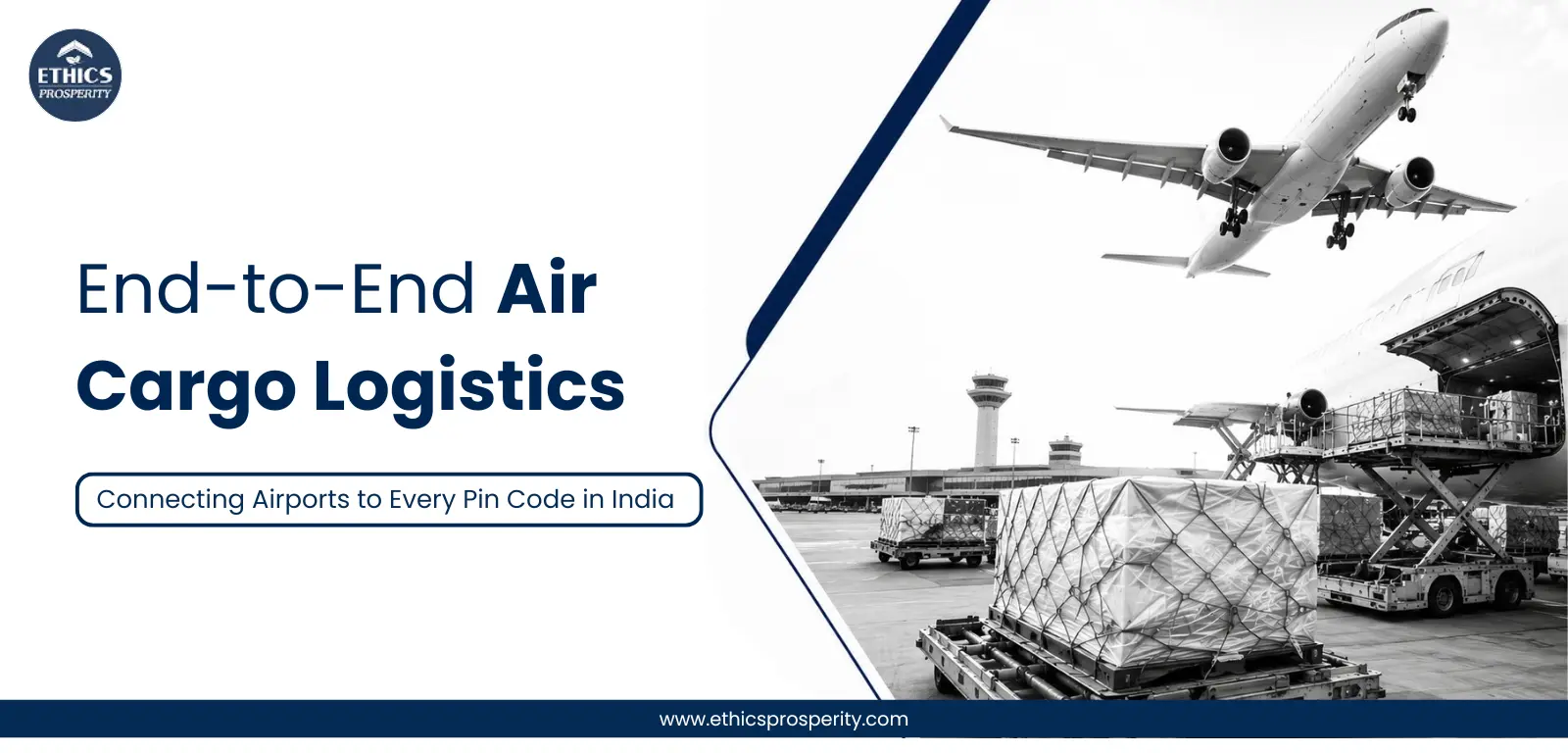
Air cargo has always played a critical role in moving urgent, high-value, and time-sensitive shipments. But in practical business operations, air movement alone is not enough. Cargo reaching an airport does not complete the job unless it also reaches the consignee, plant, distributor, hospital, retail outlet, or customer location within the required timeline. That is where End-to-End Air Cargo Logistics becomes commercially important.
For modern businesses, especially those operating across multiple cities and regional markets, cargo needs to move seamlessly from origin pickup to airport handling, flight movement, destination processing, and final delivery. Any break in that chain can delay replenishment, disrupt production, impact service levels, or create avoidable inventory pressure. In a market as geographically diverse and operationally complex as India, the ability to connect airport hubs to every serviceable pin code is no longer a premium capability—it is becoming a supply chain requirement.
In 2026, businesses are under pressure to reduce lead times, maintain tighter inventory control, improve service visibility, and respond faster to market demand. This has made integrated air cargo execution more relevant across sectors such as healthcare, retail, electronics, engineering, and manufacturing. Instead of treating air freight and final delivery as separate activities, companies are increasingly looking for a single partner who can manage the full movement with accountability.
This is where end-to-end execution creates value. It connects air transport with on-ground delivery, visibility, compliance, and customer coordination, making the shipment process more reliable, scalable, and aligned to business outcomes.
What Is End-to-End Air Cargo Logistics?
End-to-End Air Cargo Logistics refers to the complete management of a shipment from origin pickup to final destination delivery, using air freight as the core transportation mode for the linehaul segment. Unlike airport-to-airport movement, which only covers the flight leg between two airports, end-to-end air cargo includes every stage of execution before and after the flight.
A typical movement may involve:
-
Pickup from factory, supplier, warehouse, or distribution center
-
Origin consolidation and airport transfer
-
Documentation, cargo handling, and flight booking
-
Airport-to-airport movement
-
Destination cargo retrieval and processing
-
Final-mile delivery to the consignee location
This model is particularly useful for urgent B2B shipments where timing, visibility, and delivery certainty matter more than simply moving freight from one airport to another. In practical terms, it supports a more connected End-to-end supply chain by reducing operational handoffs and improving accountability across the shipment lifecycle.
For businesses managing multiple vendors, plants, distributors, or channel partners, integrated air cargo can also simplify coordination. Instead of managing separate providers for pickup, air movement, and final delivery, they can work with a single service model designed around service timelines and cargo sensitivity.
Why Businesses Need End-to-End Air Cargo Logistics in India
India’s logistics landscape is large, fragmented, and highly variable across regions. Cargo often needs to move beyond metro airports into industrial belts, healthcare clusters, regional distribution centers, and tier-2 or tier-3 markets. In such cases, airport delivery is only a midpoint, not the end of the shipment.
This is why businesses increasingly need end-to-end air cargo support rather than isolated air freight booking.
1. Urgent cargo requires full-route accountability
If a critical shipment reaches the destination airport on time but sits there waiting for release, vehicle allocation, or local dispatch, the business objective is still missed. Time-sensitive cargo needs coordinated execution from pickup to proof of delivery.
2. Fragmented handoffs create delays and cost leakage
When different vendors manage origin pickup, airport handling, air movement, and destination delivery, there is often limited ownership over exceptions. Delays at one stage can easily affect the next, especially if communication is weak or milestone visibility is poor. This is where integrated Logistics Management becomes operationally stronger than fragmented execution.
3. B2B customers expect speed beyond airport arrival
In sectors such as healthcare, engineering, automotive, and modern retail, the real measure of service is whether the shipment reaches the final destination in time to support the business need—whether that is preventing a stock-out, replenishing a retail node, supporting a production line, or delivering critical inventory to a hospital.
4. India’s growth markets demand deeper delivery reach
Many business shipments today move beyond top metros into emerging consumption and manufacturing markets. A strong air cargo partner should be able to connect airport hubs to downstream locations using structured first-mile and final-mile capabilities, not just flight access.
How End-to-End Air Cargo Logistics Works: From Airport to Final Pin Code
An effective air cargo network is built around coordination, not just transportation. While the exact process may vary by shipment type, a strong end-to-end model usually follows five operational stages.
1. Pickup and origin movement
The process begins with cargo pickup from the shipper’s location—this could be a factory, supplier site, warehouse, regional hub, or retail distribution center. Cargo is checked, secured, documented, and moved to the nearest operational airport gateway. For businesses with high shipment frequency, pickup schedules are often aligned with dispatch cut-offs and route planning.
2. Airport handling and cargo processing
At the origin airport, the shipment is prepared for air movement. This includes cargo acceptance, weight and dimension checks, packaging validation where required, documentation review, and loading coordination. Sensitive shipments may require special handling, especially in sectors such as Pharmaceutical Logistics in India or high-value electronics.
3. Air movement between origin and destination airports
Once booked and processed, the cargo moves via scheduled or dedicated air capacity depending on urgency, route availability, and shipment type. This is the fastest segment of the network, but not necessarily the most operationally complex. In most B2B supply chains, the larger risk lies in what happens before departure and after arrival.
4. Destination handling and dispatch planning
After arrival, the shipment is retrieved, verified, and prepared for onward dispatch. This stage is critical because it determines how quickly cargo can move out of the airport ecosystem and into the destination market. For businesses shipping critical components or medical inventory, this handoff needs clear SOPs and tight turnaround planning.
5. Final delivery to the consignee pin code
The last leg connects the airport to the final delivery point. This may involve metro delivery, intercity road movement, industrial zone routing, healthcare distribution, or specialized handling depending on the shipment profile. In some cases, the delivery requirement overlaps with a Last Mile Delivery Service in India for Air Freight, especially when urgent airport cargo needs direct dispatch to the end customer or business location.
Key Components of a Strong Air Cargo Logistics Network
A successful end-to-end air cargo model is not built on flight booking alone. It depends on a combination of network design, operational control, and execution discipline.
1. Airport connectivity backed by ground reach
A logistics partner should have access to major cargo airports and the ability to connect them with downstream delivery routes. This includes first-mile pickup, destination dispatch, and service reach beyond the airport city.
2. Reliable time-definite planning
Air cargo is often used for urgent shipments, so operational timing matters at every stage—pickup cut-offs, airport processing, flight alignment, destination release, and delivery scheduling. Weak planning at any one point can affect the full movement.
3. Visibility across handoff points
Businesses increasingly expect shipment visibility from pickup to final delivery, not just flight confirmation. Real-time milestone updates, proactive alerts, and exception escalation support are becoming standard requirements in professional Logistics solutions.
4. Sector-specific cargo handling capability
Some cargo categories require specialized SOPs. For example, Cold chain logistics shipments may need temperature control during airport transfer and final delivery. Fragile electronics may require handling controls, while industrial spare parts may need urgent dispatch coordination to avoid plant downtime.
5. Integrated technology and warehouse coordination
For businesses with high shipment volumes, integration with systems such as a Warehouse Management System can improve dispatch readiness, scanning accuracy, inventory staging, and pickup synchronization. This becomes especially important when air cargo is linked to fulfillment centers, manufacturing dispatches, or regional stock transfers.
Industries That Benefit Most from End-to-End Air Cargo Logistics
Pharmaceuticals and healthcare
Healthcare supply chains often operate with tight service windows, regulated handling needs, and zero tolerance for product damage or delay. Temperature-sensitive medicines, diagnostic kits, surgical supplies, specialty formulations, and emergency healthcare shipments frequently require fast movement supported by strict handling SOPs.
Automotive and industrial manufacturing
Manufacturers use air cargo for line-critical components, urgent imports, engineering spares, and production support materials. In these cases, the shipment must reach the plant or service center quickly enough to prevent downtime, not simply arrive at the destination airport.
Retail, ecommerce, and omni-channel distribution
Retail and ecommerce supply chains use air cargo for urgent replenishment, launch inventory, stock balancing, and high-priority seasonal movements. In a multi-node distribution environment, quick movement from airport to fulfillment or delivery point can directly affect customer service and stock availability.
Electronics and high-value shipments
Electronics, telecom equipment, and premium consumer products often require faster transit, better visibility, and controlled handling. These cargo categories benefit from integrated execution because delays at transfer points can affect market launches, service commitments, or inventory availability.
Benefits of Choosing an End-to-End Air Cargo Logistics Partner
A professionally managed air cargo partner does more than move freight. It reduces coordination gaps, improves visibility, and gives businesses better control over urgent cargo movement.
Faster turnaround across the full route
Integrated planning reduces idle time between pickup, airport processing, flight movement, and destination dispatch.
Single-point accountability
Instead of dealing with multiple operators for different legs, businesses work with one partner responsible for the shipment outcome.
Better customer and internal visibility
From procurement and operations to customer service and commercial teams, stakeholders get clearer shipment updates and better exception management.
Lower risk for urgent or sensitive cargo
When cargo handling, flight planning, and final-mile execution are coordinated, the likelihood of service failure drops significantly.
Stronger support for strategic supply planning
For businesses evaluating supply chain companies or benchmarking warehouse companies in India, integrated air cargo can be an important capability in maintaining service continuity, inventory responsiveness, and customer commitments.
What to Look for in an Air Cargo Logistics Company in India
Choosing the right logistics partner is not just about freight rates or airport access. The more important question is whether the company can execute a reliable air cargo flow all the way to the consignee location.
Look for a partner with:
-
Coverage across major airports and downstream pin codes
-
Experience handling urgent B2B cargo across sectors
-
Capability in first-mile pickup and final-mile dispatch
-
Process maturity for documentation, exception handling, and escalations
-
Visibility tools, milestone tracking, and proactive communication
-
Sector expertise in regulated or sensitive categories
-
Operational understanding of Transportation Logistic Challenges and Solutions in India’s multi-city distribution environment
As digital operations evolve, businesses should also evaluate whether the provider is investing in tools such as AI in Logistics, IoT, and control-tower visibility. These technologies can improve planning accuracy, cargo monitoring, and exception management—especially as Supply chain trends continue to move toward faster, more transparent, and more connected logistics execution. In some urban use cases, the final leg may also overlap with Hyperlocal Delivery models or collaboration with Last-Mile Delivery Companies in India depending on shipment urgency and destination profile.
Conclusion
Air freight delivers speed, but speed alone does not solve the business problem unless the shipment reaches the final destination on time, in the right condition, and with full accountability across the route. That is why End-to-End Air Cargo Logistics has become increasingly important for businesses operating across India’s distributed manufacturing, retail, healthcare, and industrial networks.
By connecting airport movement with first-mile pickup, destination handling, and last-mile delivery, businesses can reduce delays, improve visibility, and create a more reliable logistics flow for urgent and high-value cargo. For organizations looking to strengthen responsiveness, reduce operational handoff risk, and serve customers across every serviceable pin code, an integrated air cargo model offers a practical advantage. With the right logistics strategy and execution partner, companies can build a faster, more resilient cargo network—and that is where Ethics Prosperity can play a meaningful role.